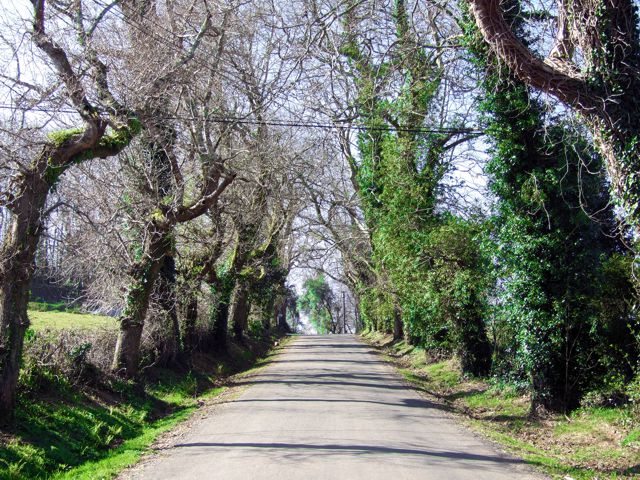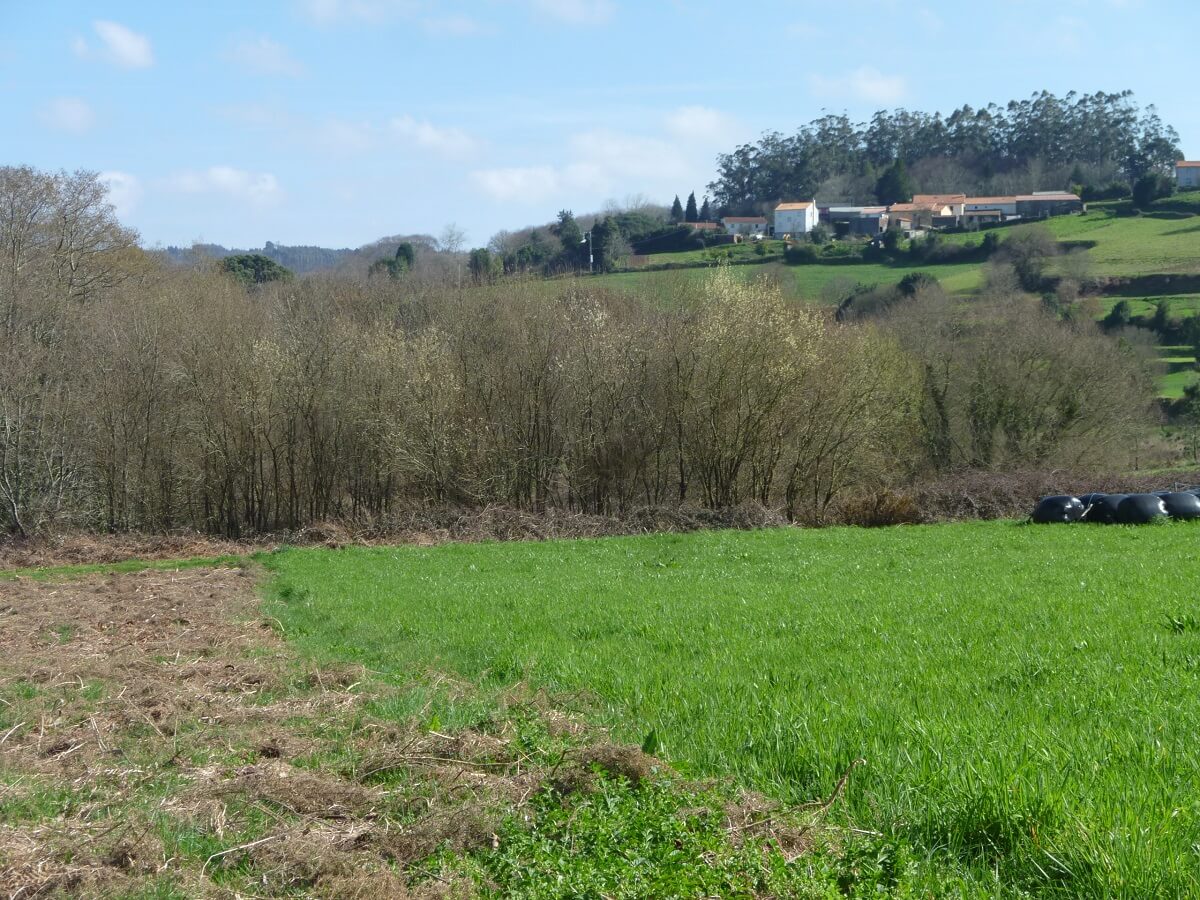
The parish of Santiago de Loroño is made up of the villages or hamlets of Arcar, Baizana, Bouzarroma, Forcadenla, Loroño, Romelle and A Vicenta, and its area is around 6 km².
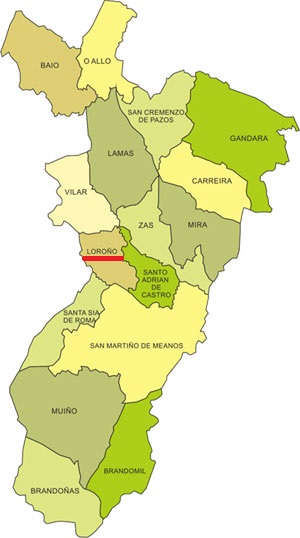
Its shape is reminiscent of a triangle and it borders the parishes of Vilar (N), Santa Sía de Roma and San Martiño de Meanos (S), Santo Adrián do Castro (E and SE) and Treos (Vimianzo, W). Almost all of its boundaries, except to the north, follow watercourses.
This is an essentially flat parish, with only two small hills standing out at its ends: to the south, Monte do Peón (356 m) and, to the north, A Pena (272 m). In terms of relief, it lies entirely within the well-known Val de Soneira. Its average altitude is around 250 m.
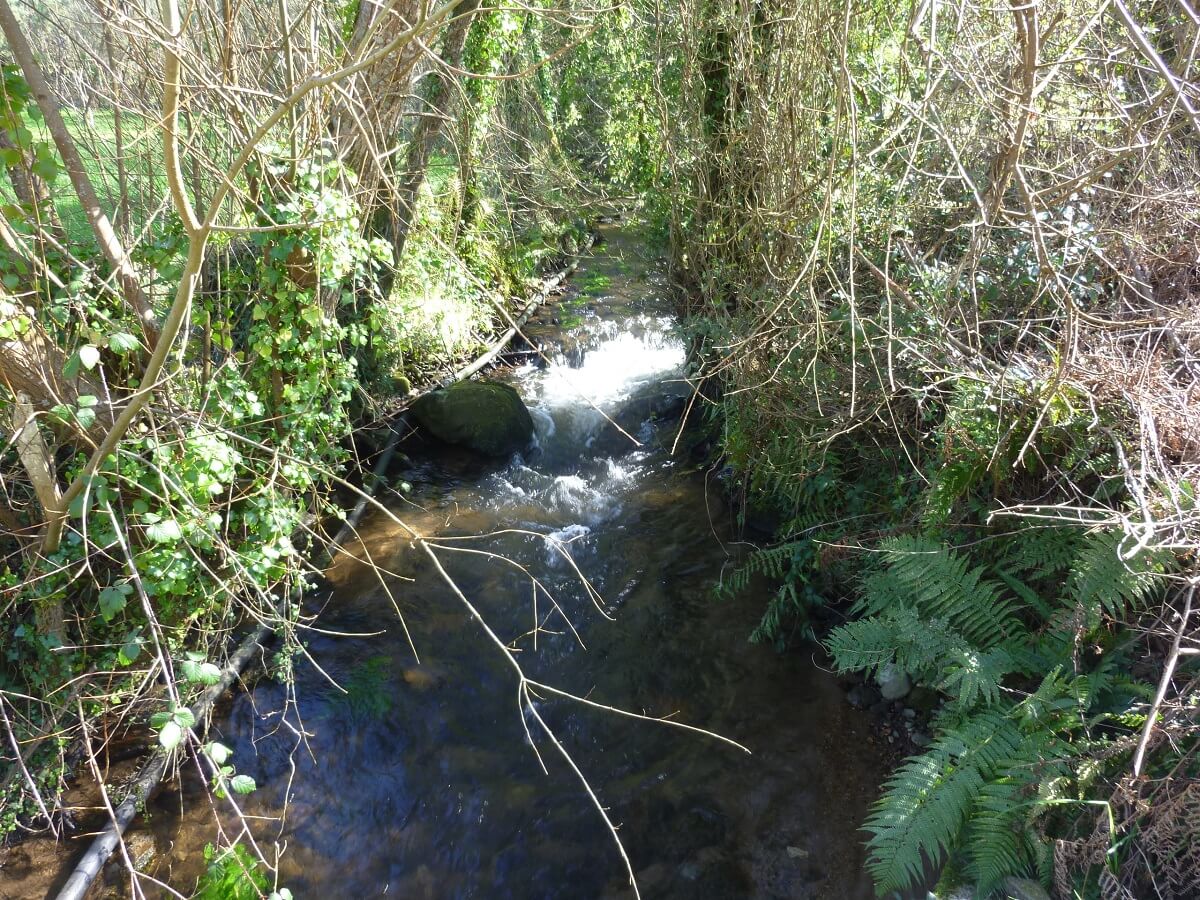
There are no rivers or streams within its interior, although most of its territory is delimited by them: the Torrente between Loroño and San Martiño, Santa Sía and Treos, and the small Berbia stream on the boundary with Santo Adrián.
Its geology indicates that it forms part of the Blastomylonitic Trough or Noia Complex, with N–S oriented bands, the remains of Hercynian folding.
As for its demographic evolution, it mirrors that of the parishes in the rest of the concello: it had 17 households in 1607; 41 in 1753; 277 inhabitants in 1887; 347 inhabitants (1930); 446 inhabitants (1970); 262 inhabitants (2000) and 182 (2016). It has lost 28.9% of its population so far this century.
Regarding its place names, it has two genuine rarities, such as the name of the parish itself, which is unique not only in Galicia but also in the whole of Spain. The other, also very uncommon, is Baizana; in both cases it is very difficult to trace their origin. It is easier to infer that of the other toponyms, following the rules of historical grammar.
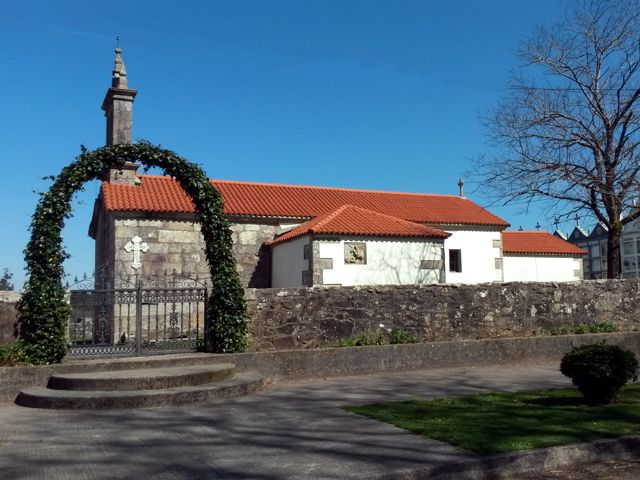
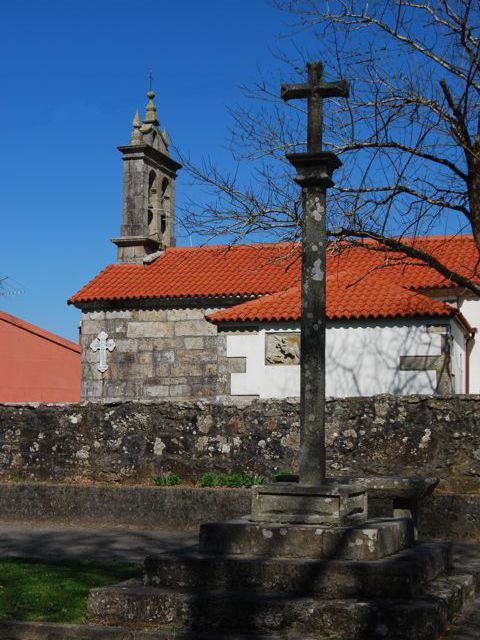
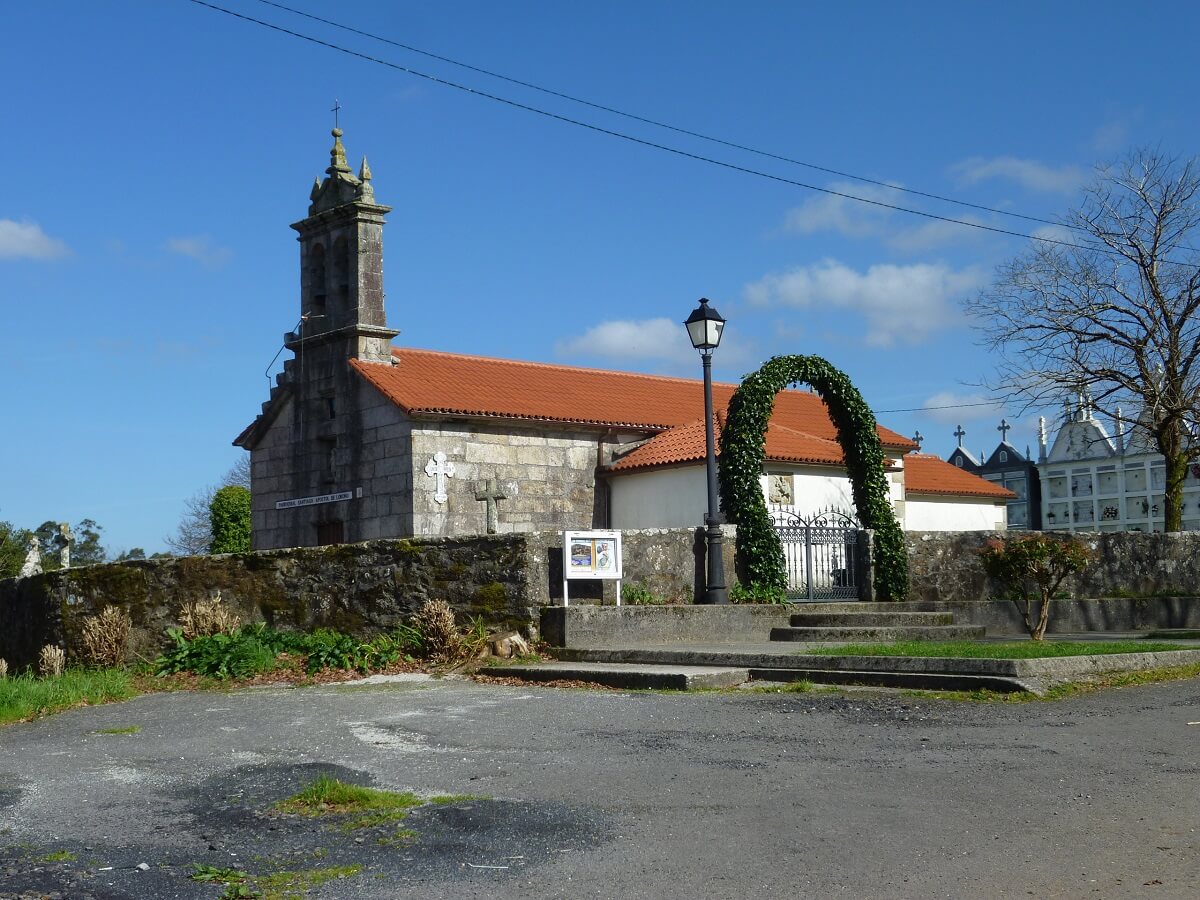
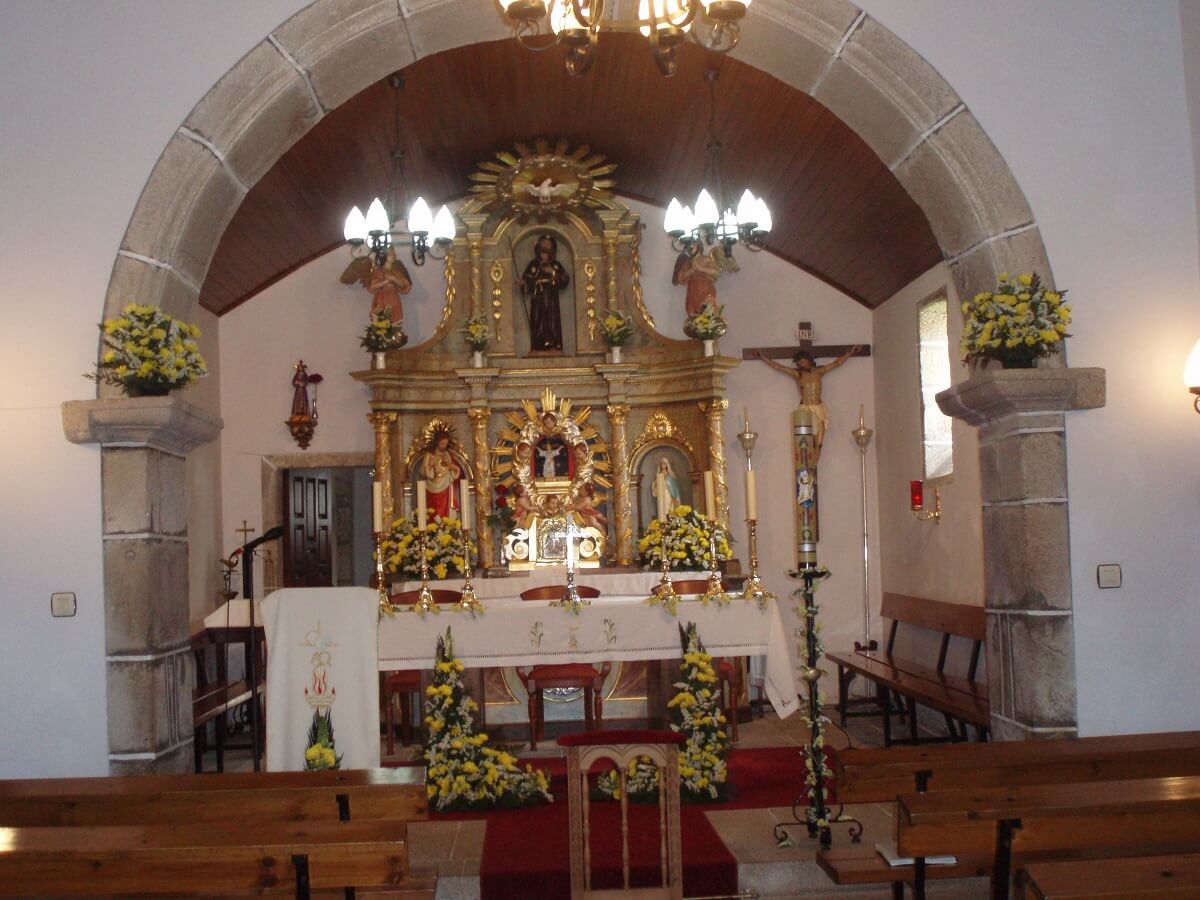
The parish church, which from the outside does not appear especially remarkable apart from a figure of Saint James on horseback brandishing a sword over a Moor lying on the ground, houses three very interesting altarpieces inside.
The main altarpiece is neoclassical, from the late 18th century. In the north chapel we find the magnificent altarpiece of Our Lady of Perpetual Help (Virxe do Socorro), Baroque in style and of the so-called marquetry or estipite type; it is a very high-quality altarpiece, one of the finest in the region. In the attic there is a beautiful relief of the Annunciation, and the central panel contains an image of Our Lady of Perpetual Help – whose way of holding the staff in her right hand was altered in the last restoration – together with reliefs of Saint John the Baptist and Saint Joseph.
In the south chapel we see the Souls’ altarpiece, Baroque–Rococo in style, with a central relief of Saint Francis releasing souls from Purgatory. On either side there are figures of Saint Roch and Saint Anthony of Padua.
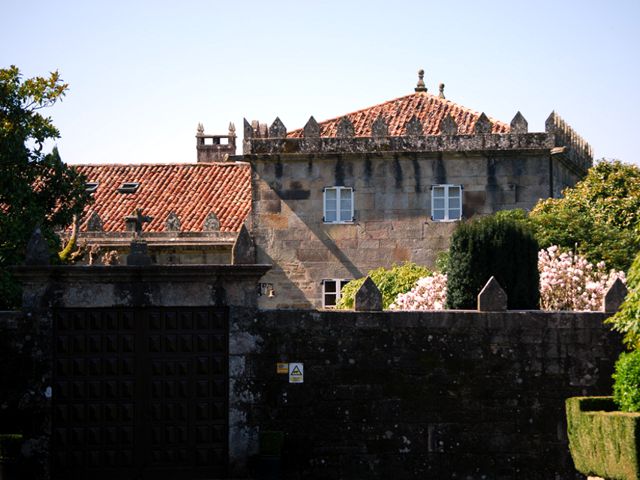
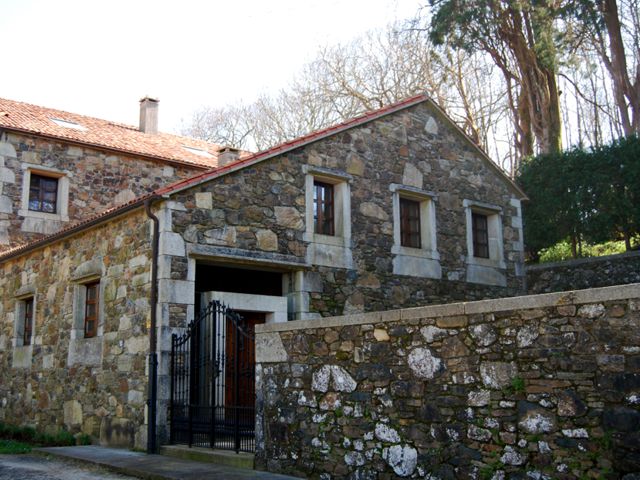
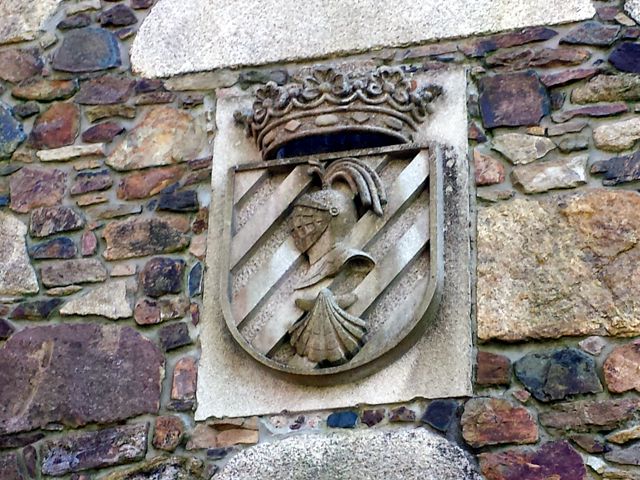
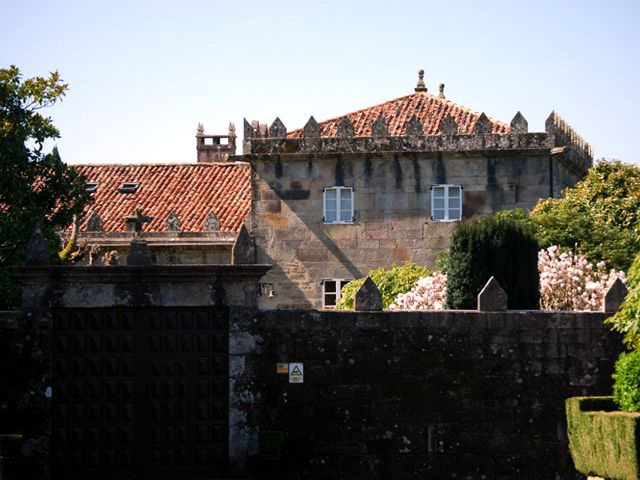
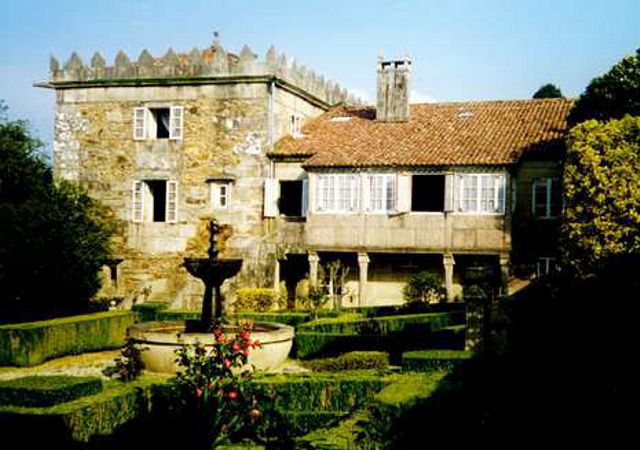
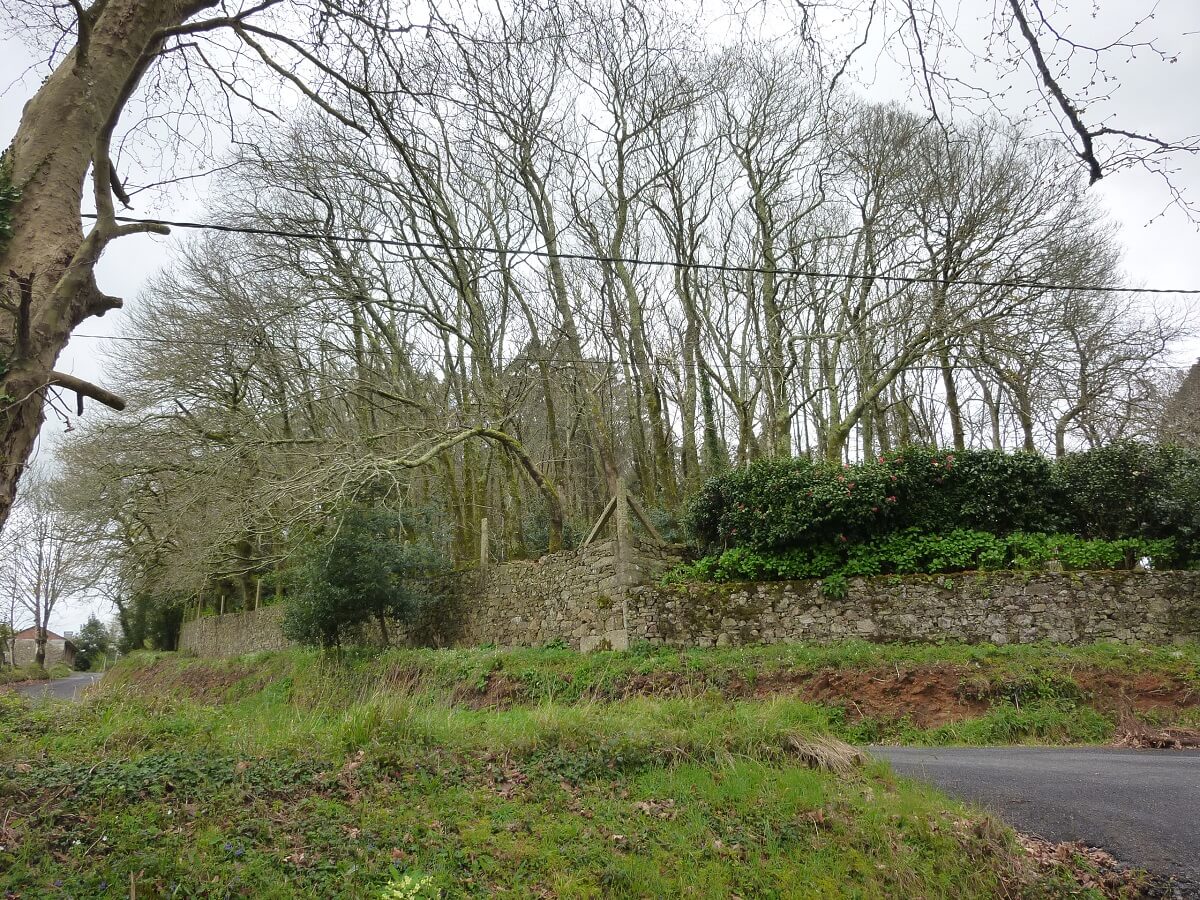
Within the parish territory, the pazo of Romelle stands out as one of the finest manor-house complexes in the whole Costa da Morte. Originally owned by the Caamaño family (a lineage from the Noia area), they eventually became related, among others, to the Counts of Altamira and the Counts of Maceda, so at one point they held the dignity of Grandees of Spain and were even benefactors of the Sanctuary of A Barca in Muxía.
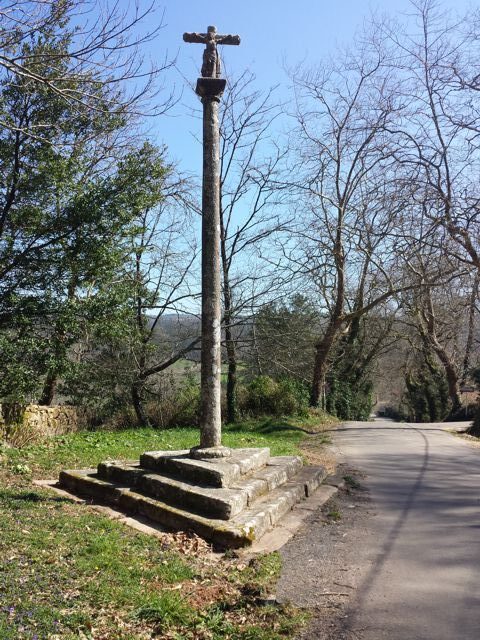
We should not forget the stone cross (cruceiro) near the entrance to the pazo, which is especially notable for its long shaft and its triangular base.
After reviewing references to the parish in historical texts from 1607 onwards, the account ends with a brief history of Calor Hermandad Deportiva, a non-federated football club founded in 1968 by the then parish priest of Santo Adrián do Castro and Loroño, Xosé M. Cundíns. Around 1969 and 1970 this club organised football matches and cultural activities that were quite unusual in the area. The text also mentions the celebration of the 40th anniversary of these activities in 2009 and 2010.