Baio, as the most populated parish in the concello of Zas, is the birthplace of many notable figures, some of them very important within Galician culture. For this reason, the information on this parish that is submitted to be included in the “Zas polo miúdo” section of the Concello de Zas website, given its length, has been divided into two parts, in accordance with the summary shown above, in order to make it easier to understand and to grasp its importance.
This first part covers all the general aspects of the parish: geography, geology, demography, texts and historical references, certain points of interest or curiosities, etc.
The second part is reserved for a study of the artistic features of its two churches, the notable people of Baio, the festivities and an inventory of the assets of its artistic and archaeological heritage.
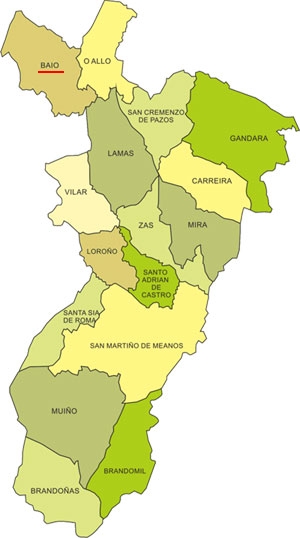
With regard to its geography, we highlight that it is located in the north-western corner of the concello of Zas. The village of Fornelos lies furthest to the west of all the villages in the concello and is the second most northerly. It borders parishes in three different concellos: Borneiro (Cabana de Bergantiños), Sarces and Nande (Laxe), Salto and Bamiro (Vimianzo), and also the parishes of Lamas and O Allo within the concello of Zas itself. Its area is around 8.8 km2. It is made up of the population centres of Agreanas/A Braña, Baio, Baio Pequeno, A Cacharosa and Fornelos; more recently, the smaller settlements of Campo do Rollo, O Chamberín and Su a Agra are also mentioned.
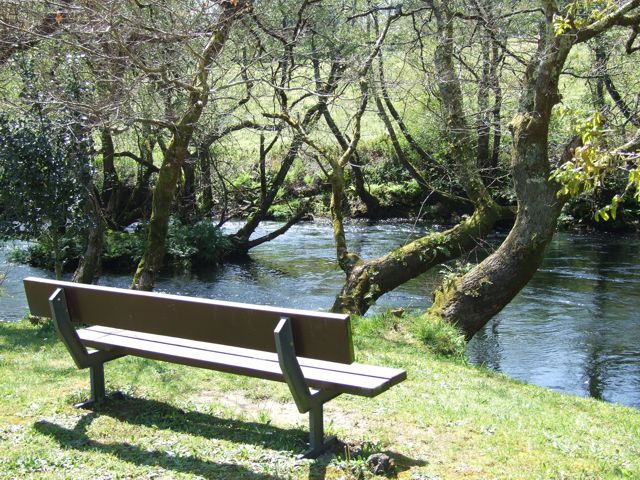
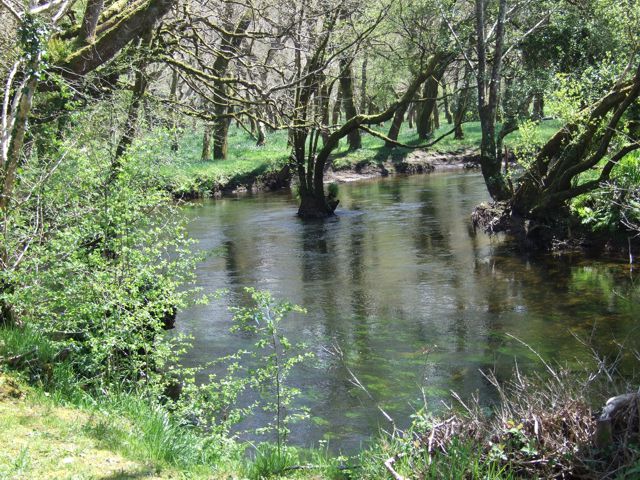
The territory is mainly flat, although in its eastern part, on the boundary with the parish of O Allo, there are some small elevations. A large part of its surface area corresponds to the valley of the río do Porto and the Fornelos stream. The río do Porto enters the parish from O Allo and, after just over one kilometre, serves as the boundary with the parishes of Lamas, Bamiro and Salto for a further 3.8 km. Along this stretch, the main river receives, on its left bank, the waters of the rivers of Zas and Vilar. The small Fornelos stream flows almost entirely within the parish.
Geologically it forms part of the Malpica–Tui Unit and, in lithological terms, it shows a certain uniformity based on amphibole-bearing orthogneiss, biotitic granodiorites or schists and paragneiss of Hercynian or late-Hercynian age. In the valleys of the Porto and Fornelos rivers there are Quaternary sedimentary materials.
As for its place names, the etymological origin of the parish’s own name, Baio, is much debated, and several proposals have been put forward: the name of a Roman landowner (Badius) or a river crossing (vadu), to which an epenthetic “i” would have been added. For many years there was alternation between the use of “b” and “v” or “i” and “y”. The other place names seem to have a much clearer origin. The oldest document we know of in which the name Bayo appears dates from 1452.
A detailed study is also made of a manorial contract: the Foro das Facendeyras, which was in force between 1498 and 1901 and under which the parish’s inhabitants were obliged to pay certain rents that changed over time, not without first losing several legal disputes.
Likewise, the full text (in extenso) reports on historical documents that refer to the parish: from the feudal obligations owed to the Count of Altamira, to the description by Jerónimo del Hoyo (1607), the information contained in the Ensenada Land Registry (1753), and what is said about it by Pascual Madoz (ca. 1847) or Carré Aldao (ca. 1928).
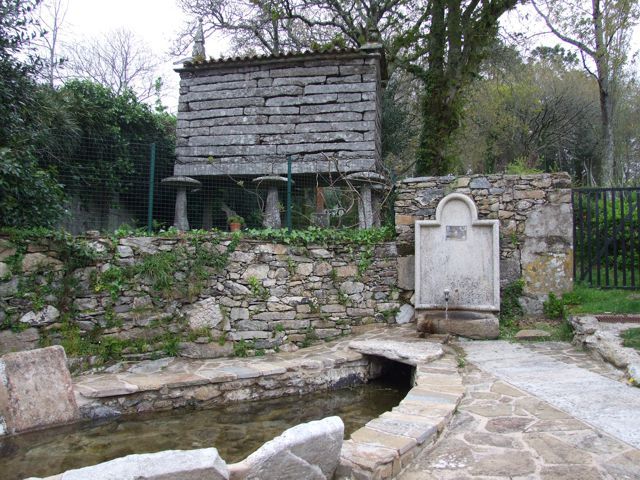
Curious and interesting is the story of José Miguel López, vinculeiro of the Casa do Bao in Fornelos, whose gambling addiction in the mid-19th century left him completely ruined after losing all his property, including a stone hórreo (granary), which was moved to Carreira, according to Ramón Romar, one of his descendants.
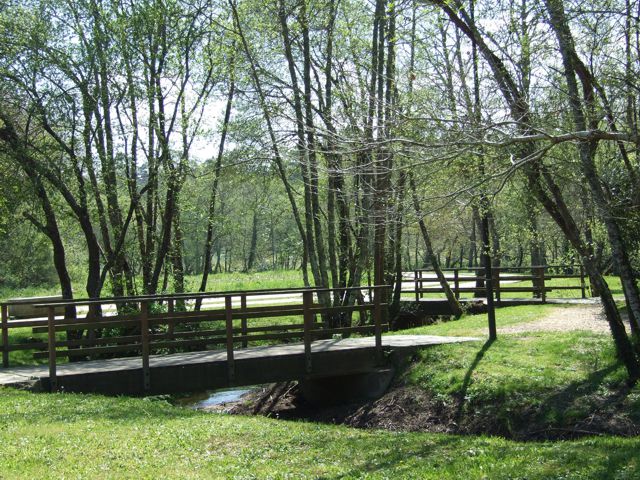
The parish’s development owed much to improved communications thanks to the construction or refurbishment of the existing bridges of Lodoso (1897) and Baio (1852/53). It was also important that Baio lies at a crossroads linking the Costa da Morte with the cities of A Coruña and Santiago. Another driving force behind the growth of the parish was the fair, known as the Baio Fair but which, from time immemorial until very recent times, was actually held in A Piroga (Bamiro, Vimianzo).
Also noteworthy is the existence of a military camp next to the Lodoso bridge between 1943 and 1944 to monitor a possible Allied landing at some point on the Costa da Morte during the Second World War.
Finally, we refer to the first general strike in the parish’s history, on 14 May 1990, as a result of a conflict with the residents of Zas over the location of the secondary school, which was eventually built in Baio. Another event worth highlighting was one of the largest demonstrations (30 April 2011) ever held in the Costa da Morte, in this case at a district or supra-district level, calling for the vehicle inspection station (ITV) to remain in O Allo.
In the second part we will talk about the two churches, old and new, the many notable figures born in the parish and the list of assets in its artistic and archaeological heritage.
In the second part devoted to the parish of Baio we provide detailed information on Baio’s two churches, the old and the new, and also on notable figures, cultural, sports and neighbourhood associations, and even on the parish festivities.
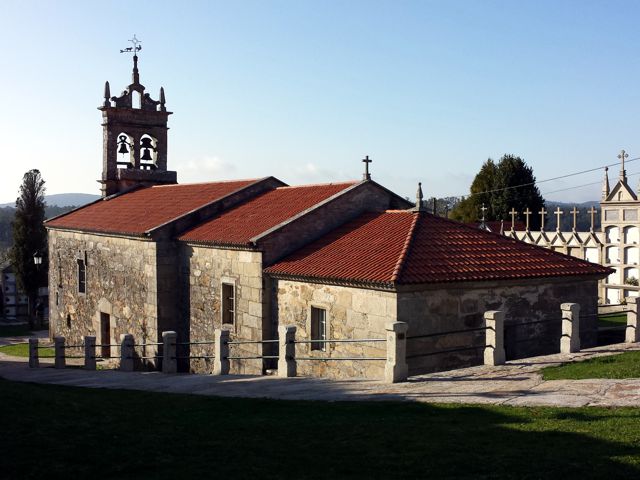
The old church is Baroque in style, built between 1730 and 1741, except for the belfry, which dates from 1843. Inside, the main altarpiece stands out, a Baroque work from 1734.
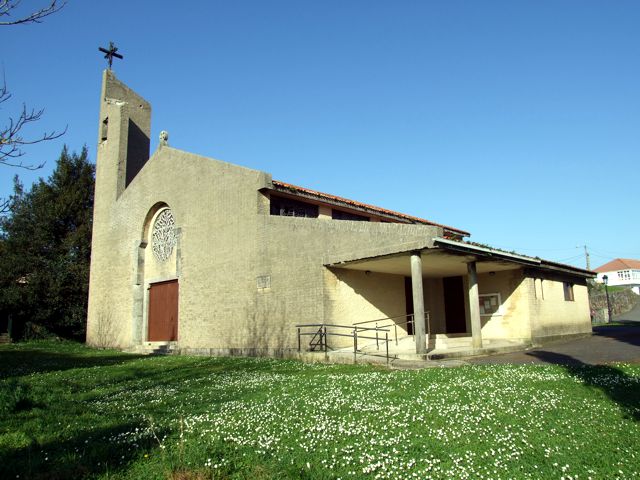
The new church was built between 1982 and 1985 by the Madrid architect José Luis Fernández del Amo, on land donated by Archbishop Maximino Romero Lema, whose tomb is located inside the church.
This parish is characterised by the many notable people who were born there or who were connected with it:
- Agustín Martínez Ribera (early 19th century), altarpiece carver and sculptor.
- Manuel Martínez Pose (1858-1935), choirmaster and organist at Tui Cathedral.
- Enrique Labarta Pose (1863-1925), humorous poet and short story writer.
- Teodoro Morgade (1915-1935), introspective poet who died in the flower of youth.
- Xosé Collazo Martínez (1880-1962), stonemason and poet who emigrated to Buenos Aires (Argentina).
- Roberto Veloso, co-founder of the Mocedades Galeguistas in Buenos Aires.
- Carmen Balboa López, persecuted under Francoism because of her family ties, was a teacher in Bamiro (from 1961 to 1973) and later at the Labarta Pose school group in Baio.
- Xosé Romero Lema (1901-1927), Galician nationalist and friend of the poet Manuel Antonio.
- Francisco Romero Lema (1903-1972), local chronicler, scholar of Labarta’s work and important lexicographer.
- Maximino Romero Lema (1911-1996), archbishop, high-ranking prelate in the Vatican under Pope Paul VI and Favourite Son of Baio for his philanthropy.
- Uxío Romero Pose (1949-2007), auxiliary bishop of Madrid and distinguished researcher into the history of the Church.
- Ovidio Vidal Ríos (1912-2007), army general and renowned endocrinologist.
- Jorge Mira Pérez (1968), professor of Electromagnetism at the University of Santiago de Compostela (USC) and a leading science communicator in the media.
- Ricardo García Mira (A Coruña, 1956), professor of Social Psychology at the University of A Coruña (UDC) and member of the Spanish Parliament.
- José Santos Reyes (Baio, 1966), professor of Computer Science and Artificial Intelligence at the UDC.
- Pepe de Valiña (1943-2004), prominent cultural and community activist to whom many initiatives are owed.
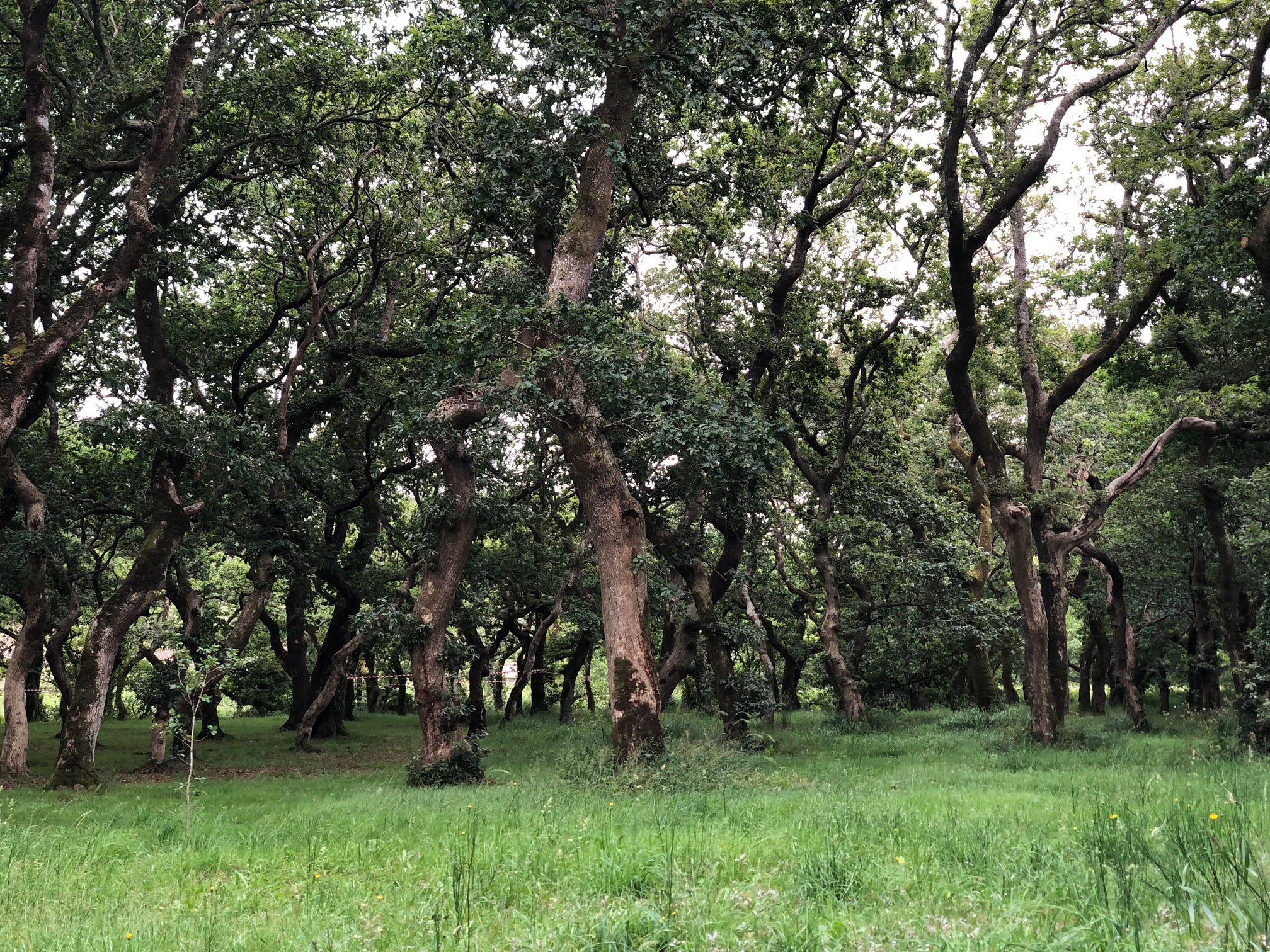
The text also refers to the activities of the now-defunct Cultural Association Labarta Pose, the choir Xan Mella, the A.C. Adro, the theatre group Badius, the neighbourhood associations Tabeirón and A Fonte. It also includes a summary of the 55 seasons of the C.D. Baio football club and the activities of the A.D. Su a Agra, as well as mentioning the popular Festa da Carballeira and the recent Fouciño – Film Festival awards.
With this second instalment on the parish of Baio we bring to a close the detailed study of each of the 16 parishes in the concello of Zas. We hope it has been useful as reference material or to satisfy curiosity and that it helps the inhabitants of our concello to get to know their territory a little better.