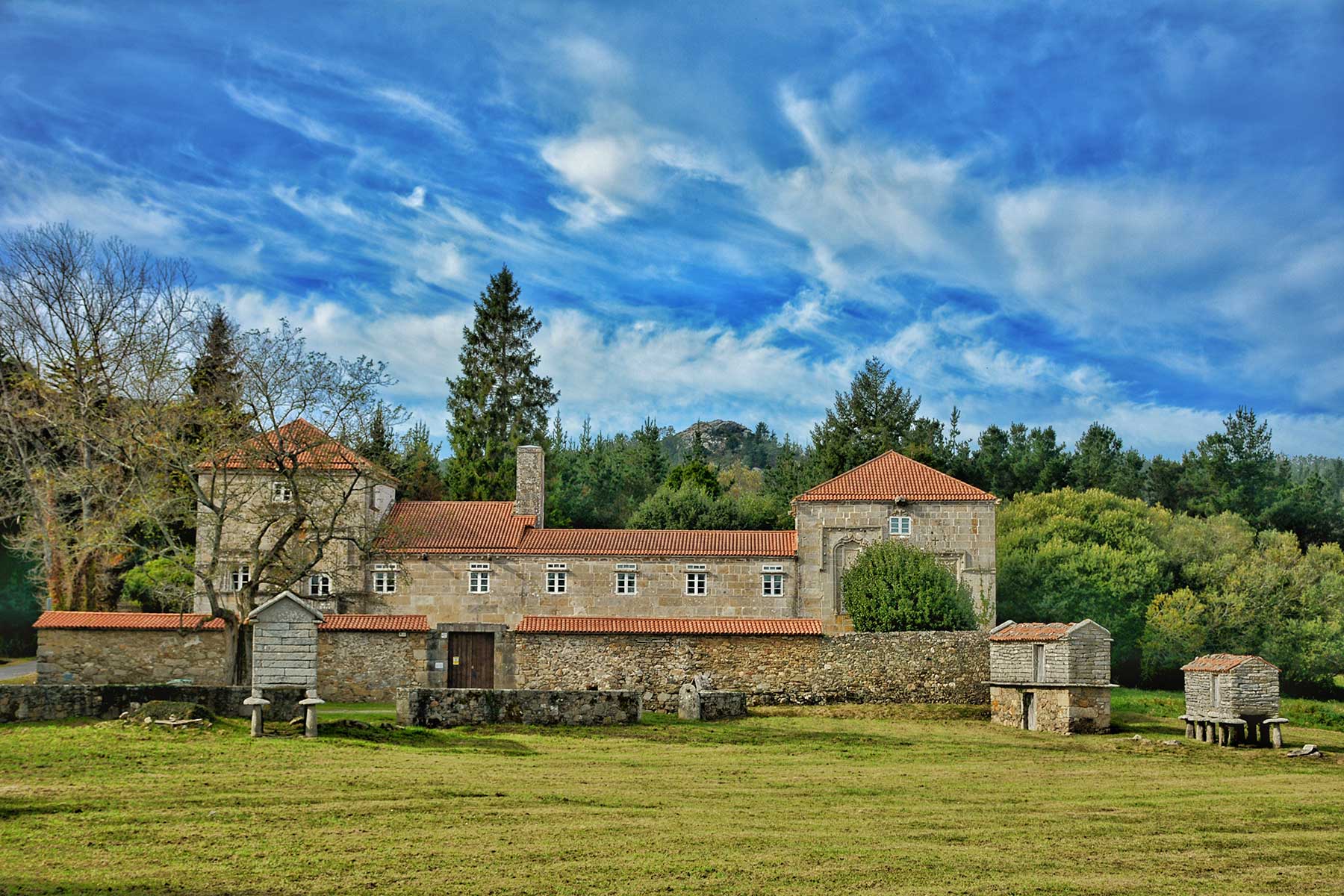
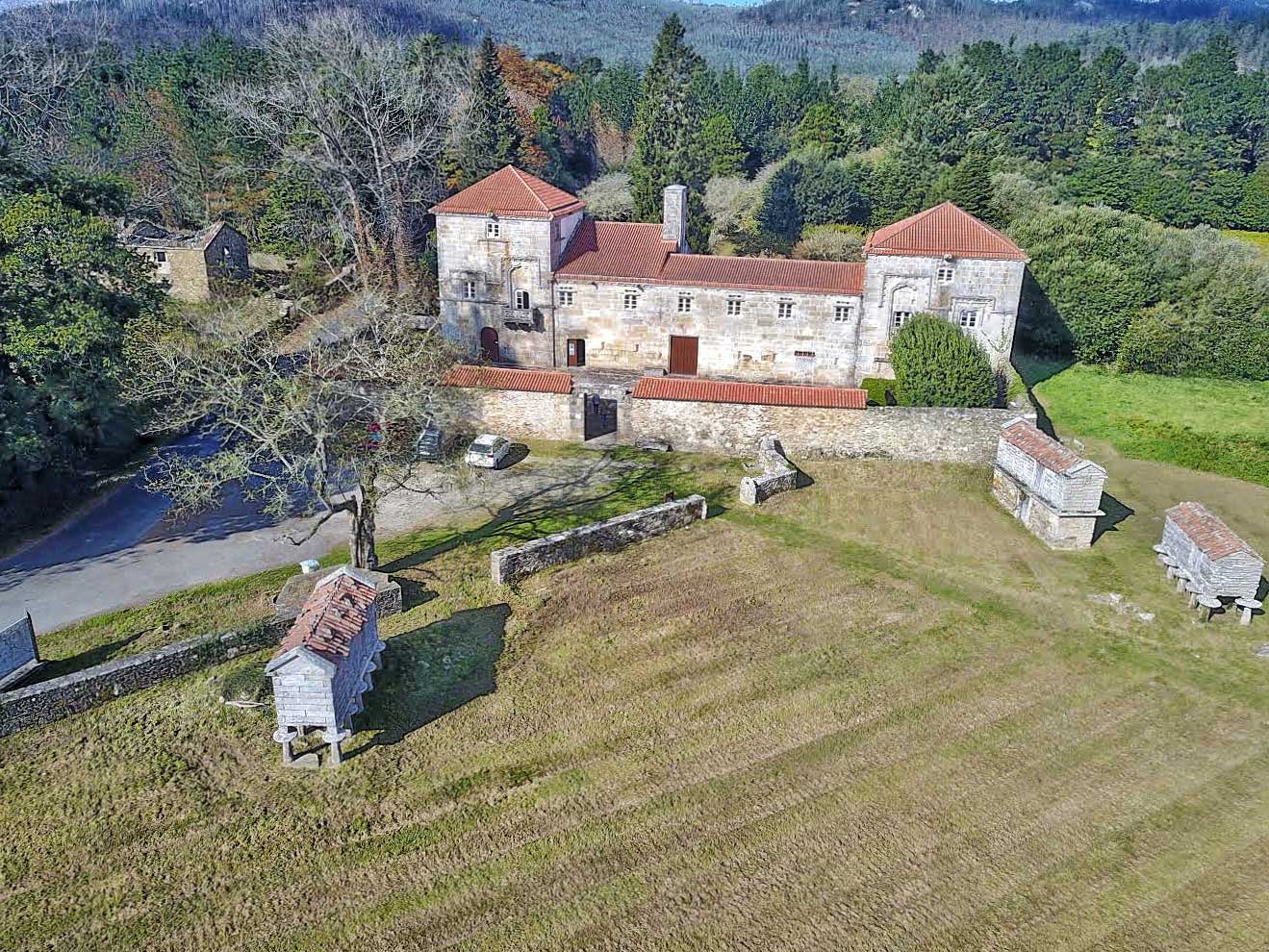
The Pazo das Torres do Allo is one of the oldest pazos in Galicia and one of the best examples of noble life in the early Middle Ages. They were erected by the Gomes de Rioboo family, who came from the neighboring Torre da Penela, in Silvarredonda (Cabana de Bergantiños). These were vassals of the powerful Counts of Altamira. Due to the marriage of Berenguela Sánchez de Altamira with Gomes de Rioboo Vilardefrancos, the pazo was built for the enjoyment of his descendants. It is assumed that Gomes owned a castle in the Terras de Allo and the marriage with an Altamira would have been in recognition of some favor between the two families.
The first lord of Allo would be the couple’s son, named Alonso Gomes de Rioboo Vilardefrancos, who was born in 1460. This grew up among the Irmandiñas revolts that would destroy almost all the fortresses of Galicia, even the one that would exist here, in the Terras de Allo. After the Irmandiñas revolts, the noble power began to change its way of life and began to inhabit pazos and large manor houses, to the detriment of castles and fortresses. The new Lord of Garlic would be the one who first inhabited the Towers. For this reason, we could be in front of the oldest palace in Galicia, since its antiquity dates back to the end of the fifteenth century.
Allo’s name may be related to the word “ayo” which refers to a person in the service of a great nobleman, such as the Rioboo. Others say that the place name could come from the Latin word “angelus” referring to a curve or meander that the Rio Grande makes in this area and delimits these lands.
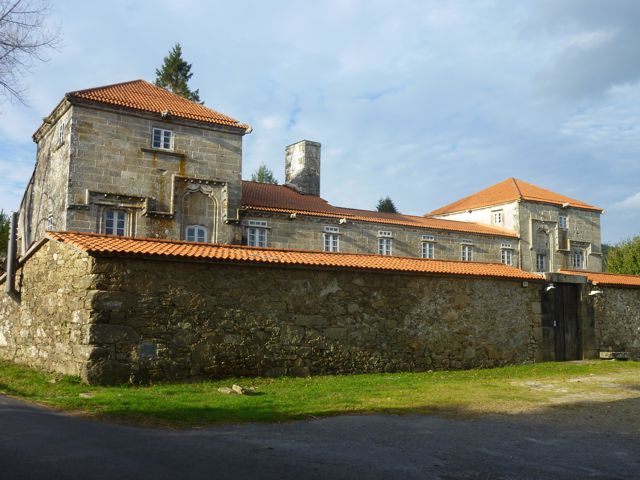
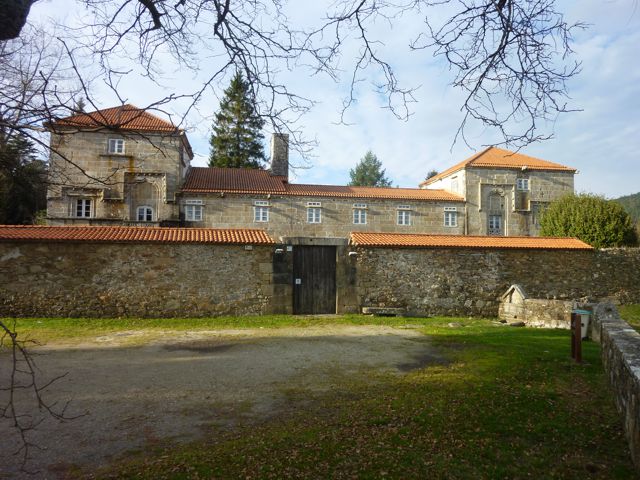
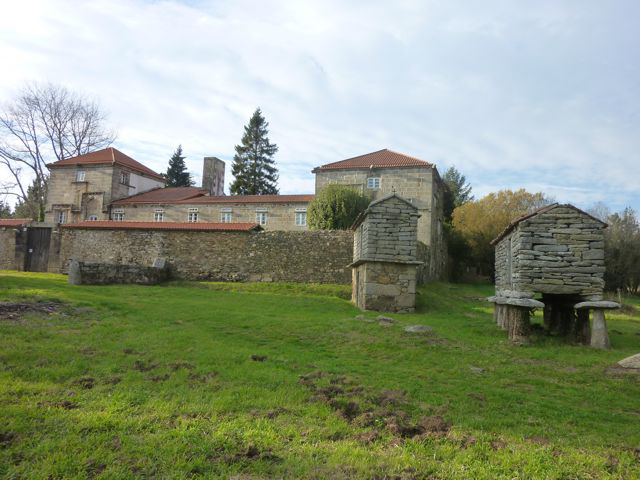
Despite the two current towers, in their origin there was only one, the one on the right if we look at it from the front (Old Tower). Its origins possibly date back to the early years of the sixteenth century. A little later a larger body and the south tower were built. The building was built on an old manor house and coexisted with parts of it. It is possible that the remains of this building were used as a shelter for the servitude.
In the following centuries the family began to obtain greater wealth and power, due to inheritances or family unions, such as that of Antonio de Rioboo and María de Seixas, owner of the Pazo de Cabanas, on the banks of the Eume. This marriage union causes the pazo to become an occasional home, due to the possession of the new Pazo de Cabanas. Their son, Gomes de Rioboo Seixas Vilardefrancos, would be the one who built the “Torre Nueba” and other dependencies of the palace, such as a granary, mills, fences and various houses for the servants. It is also possible that he ordered the construction of the Fountain of San Ramón, which is located in front of the granaries. This happened in 1669 and 1689.
Already in the eighteenth century the garden would be built, which no longer exists today and that only a few old trees remain. The stone kilns in the middle building date back to the nineteenth and twentieth centuries.
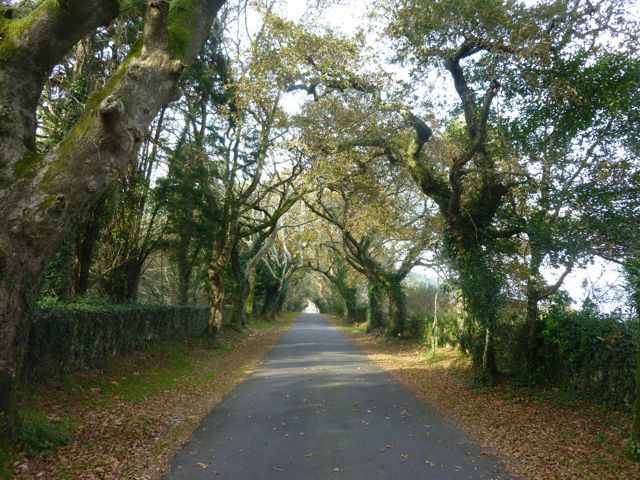
One of the most famous characters who lived in the Pazo was the Galician naturalist Víctor López de Seoane, who married (1869) the widow of Nicolás María Rui-Gomes Rioboo, the first woman to inherit the Pazo. It is believed that it was Víctor López who planted the bananas and oaks that flank the entrance road to the palace. In the twentieth century they would only inhabit the mansion in servitude until the year 1950 when it was abandoned to enter a stage of decadence. It would not be until 1998 when the Provincial Council of A Coruña reached an agreement with the owner family (López-Rioboo), for its purchase and subsequent creation of a social project. This is how the Heritage Information and Resources Center is located today. The building is now a museum that houses utensils of the time as well as a set of articles related to the crafts and ethnoculture of the region.
To be admired are the ornamental motifs that decorate the façade, such as coats of arms, arches, balconies or gargoyles. About a hundred meters away is the church of the palace known as San Pedro do Allo. A great example of the reconstruction of a historic building for the admiration and enjoyment of all. The visit is free of charge.
LOW SEASON
From 15 September to 15 June (except Holy Week)
Open on SATURDAYS, SUNDAYS and HOLIDAYS from 11:00 to 19:00 hours.
EASTER
From April 12 to April 20
Open from 11:00 a.m. to 8:00 p.m.
Guided tours at 13:00 and 17:00.
HIGH SEASON
From 15 June to 15 September
Open from MONDAY to FRIDAY from 11:00 to 20:00 hours, and SATURDAYS and SUNDAYS from 11:00 to 21:00 hours.
Torres do Allo will be closed on January 1 and 6, December 24, 25 and 31.
Contact telephone number: 655 716 743.
Website: www.torresdoallo.gal