During the Ancien Regime it belonged to the jurisdiction of Vimianzo, with the Lamas and later the Caamaño de Romelle holding the right of presentation to the parish benefice.
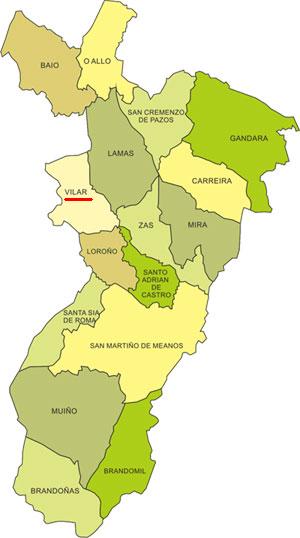
It covers an area of about 6.7 km2 and its population centres are Artón, Pazos, Quintáns, Saconde, Sandrexo and Vilar. Pazos and Sandrexo are shared with the parishes of Tines and Treos (Vimianzo), respectively. It borders, to the N, with Bamiro (Vimianzo); to the S, with Loroño (Zas) and Treos (Vimianzo); to the E, with Zas and Lamas; and to the W, with Tines. Its outline is reminiscent of a rectangle.
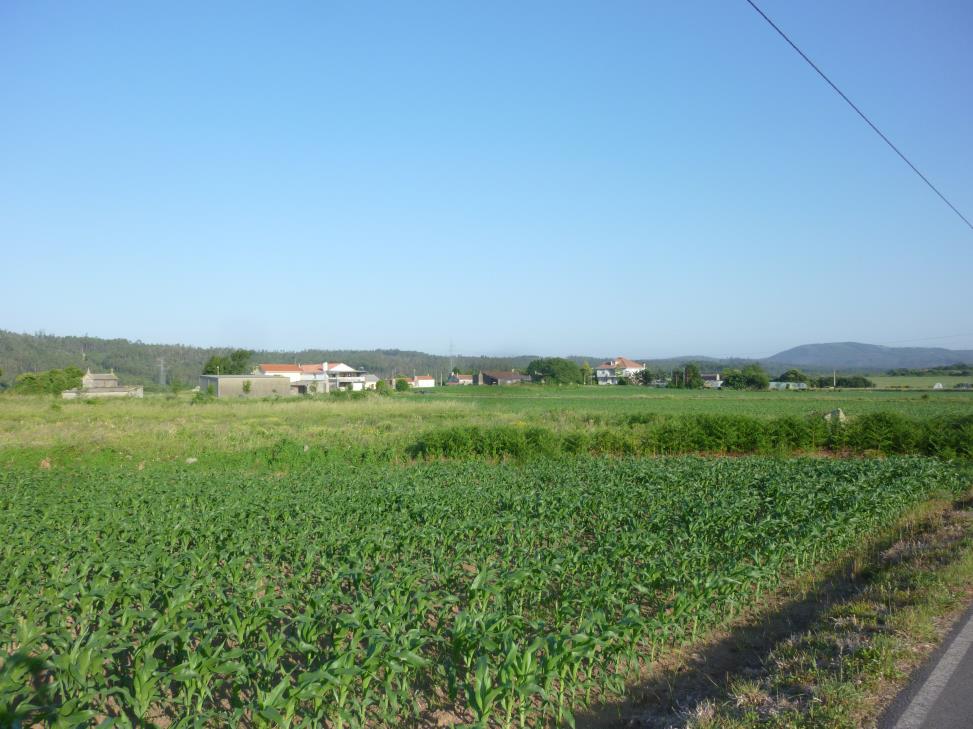
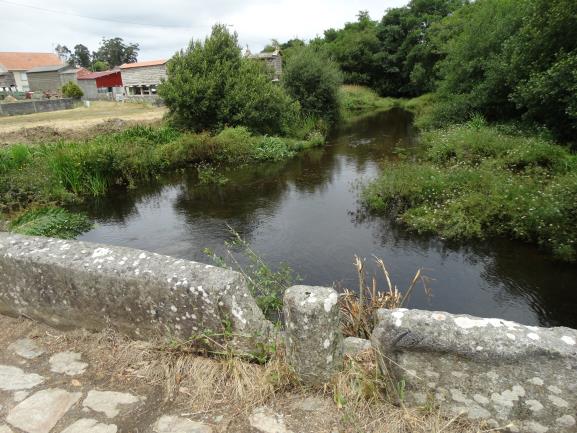
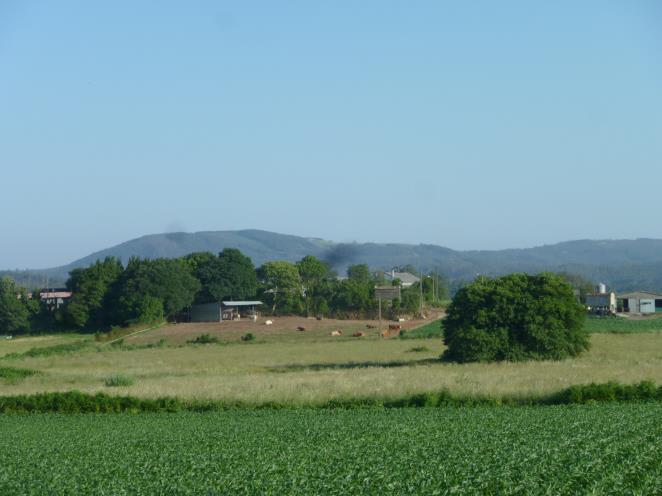
This is a parish where flat lands predominate, with very little difference in height between the highest points and the lowest – around 60 m. It is crossed by the río de Vilar, formed by the confluence of the Xora and Torrente streams, which will flow, near Baio, into the río Grande or do Porto.
Geologically it forms part of the Noia Complex or Blastomylonitic Trough and its materials are arranged in bands running N–S, following the direction of the Hercynian folding. Almost all of them date from the Cambrian period, except for the sedimentary deposits along the riverbanks.
As for demographics, it shows the same trends as the rest of the parishes in the concello, with a notable and continuous loss of inhabitants, especially from 1970 onwards: 16 households (1607), 54 households and 228 inhabitants (1753), 50 households (1769), 46 households and 229 inhabitants (1836), 46 households and 249 inhabitants (1845), 373 inhabitants (1928), 76 households and 407 inhabitants (1965), 531 (1970), 313 (2000) and 217 (2016).
It has three place names which are true curiosities, as they are unique in Galicia: Artón, Saconde and Sandrexo.
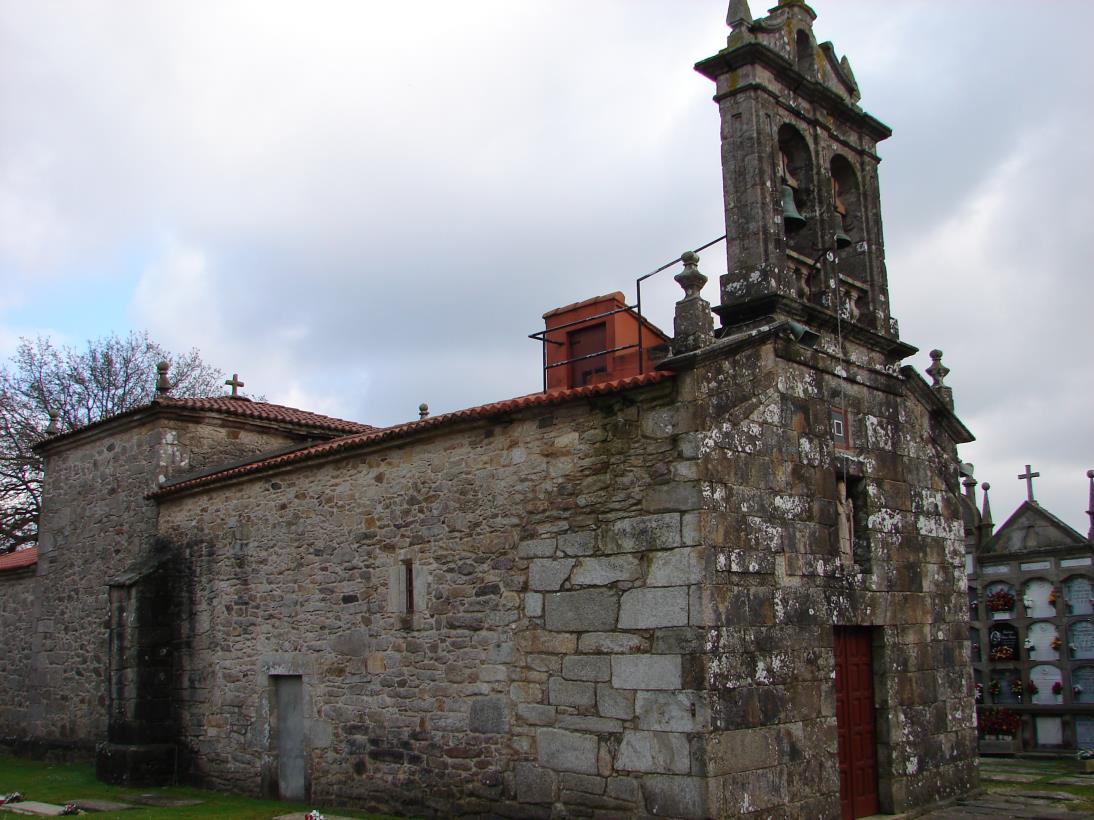
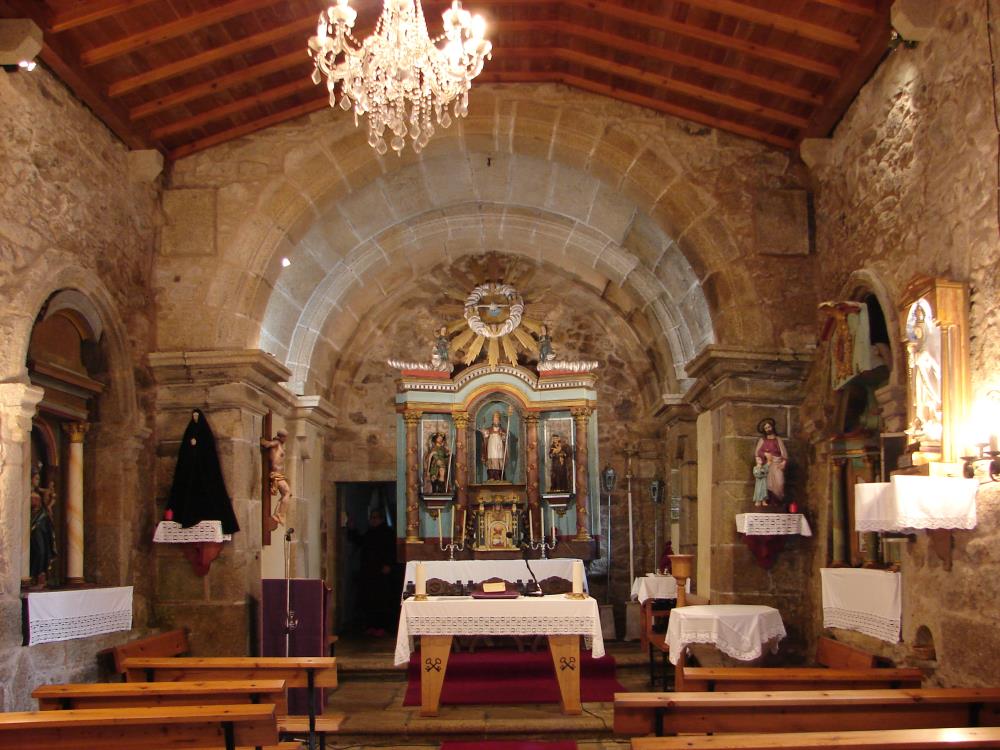
The parish church has a hall-church ground plan. In the chancel and in the sacristy we find the most interesting architectural elements, with barrel vaults springing from pilasters. In 1729 extension works were carried out, and the belfry dates from 1848.
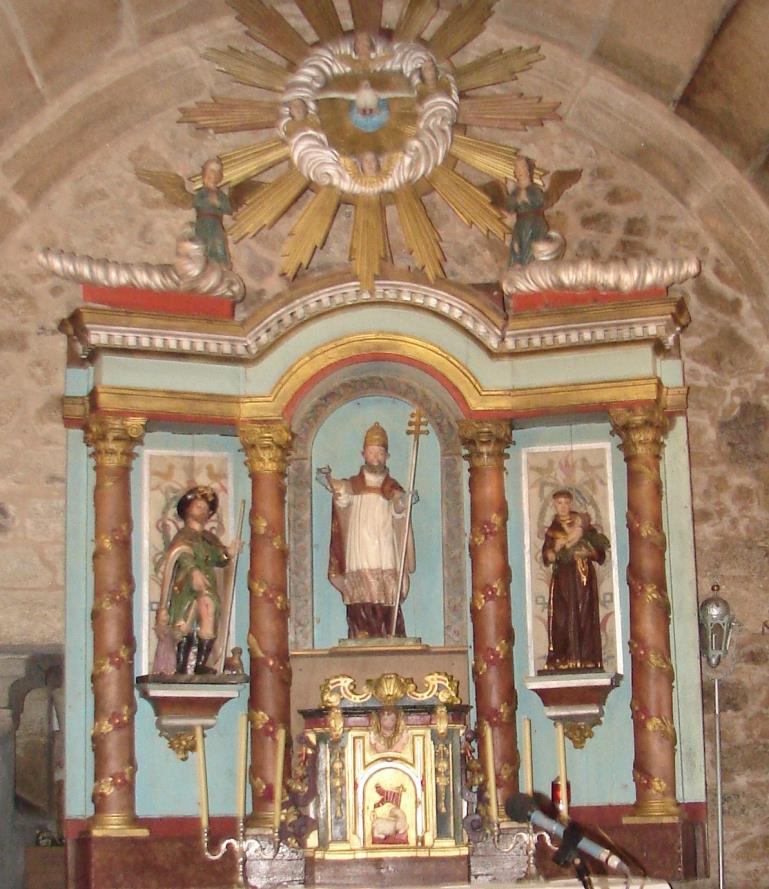
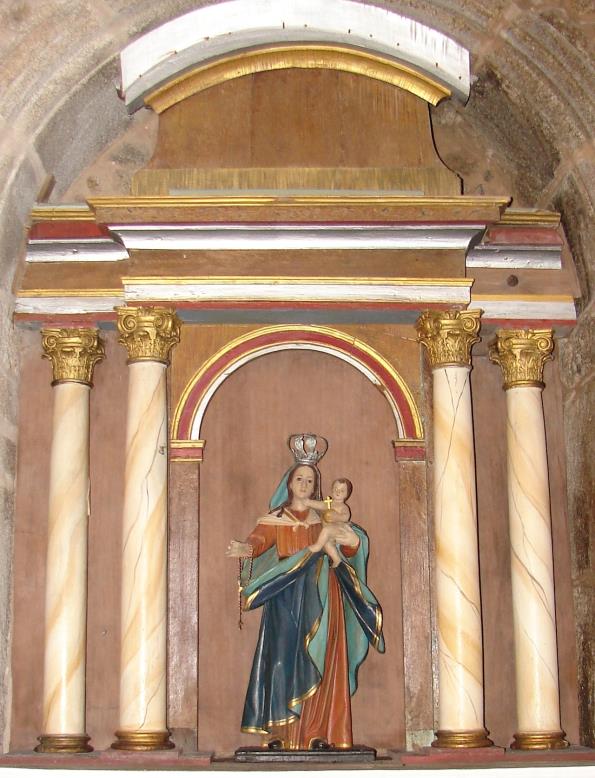
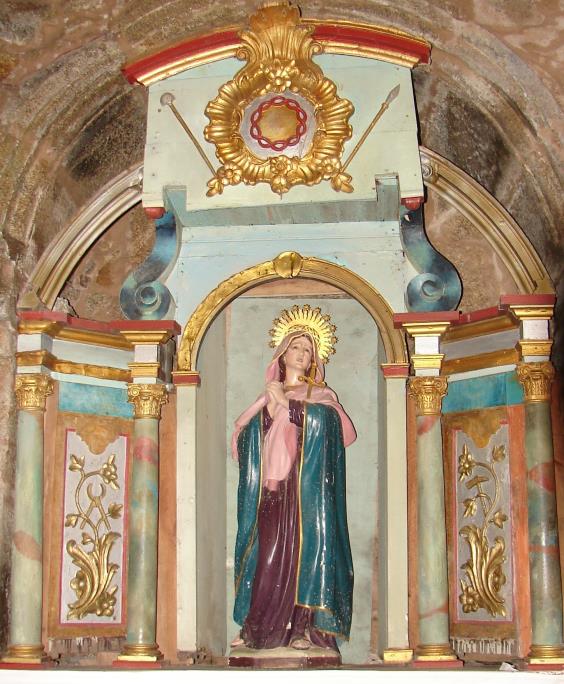
Inside the church there are three very simple altarpieces – the main one and two side altarpieces – all the work of a local sculptor, Francisco Castro Agudín.
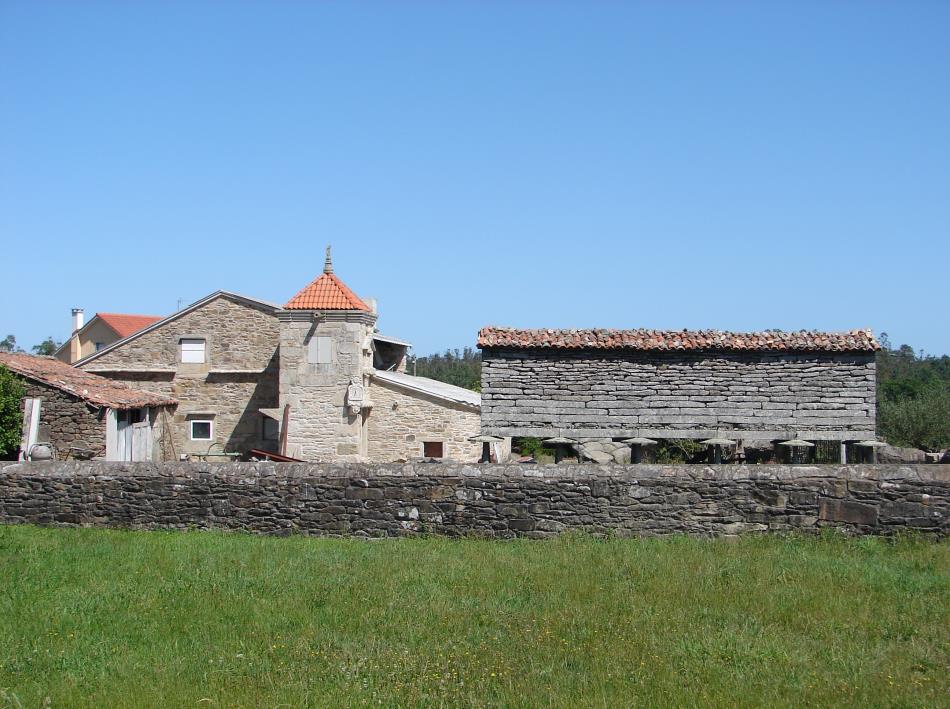
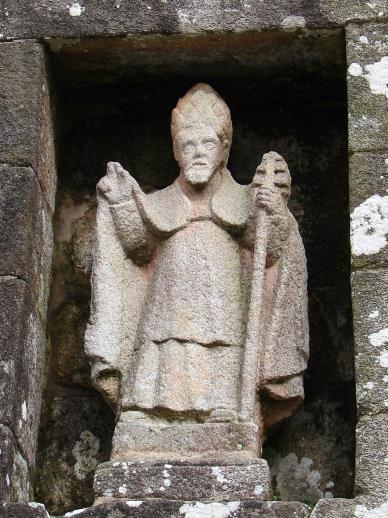
On the main neoclassical altarpiece (from between 1809 and 1819), the images of Saint Peter, Saint Roch and Saint Anthony stand out. The north side altarpiece, also neoclassical, is dedicated to Our Lady of the Rosary (also from between 1809 and 1819). The one on the south side, dedicated to Our Lady of Solitude, preserves Baroque–Rococo features (this one from 1797). All three were the work of a sculptor based in Sandrexo, though in one of the houses belonging to the parish of Treos. His name was Francisco Castro Agudín, and he was a very prolific artist, producing, between 1778 and 1820, main and side altarpieces for the churches of Vilar, Treos, Tines, Bamiro, Salto, Zas, Mira and Gándara.
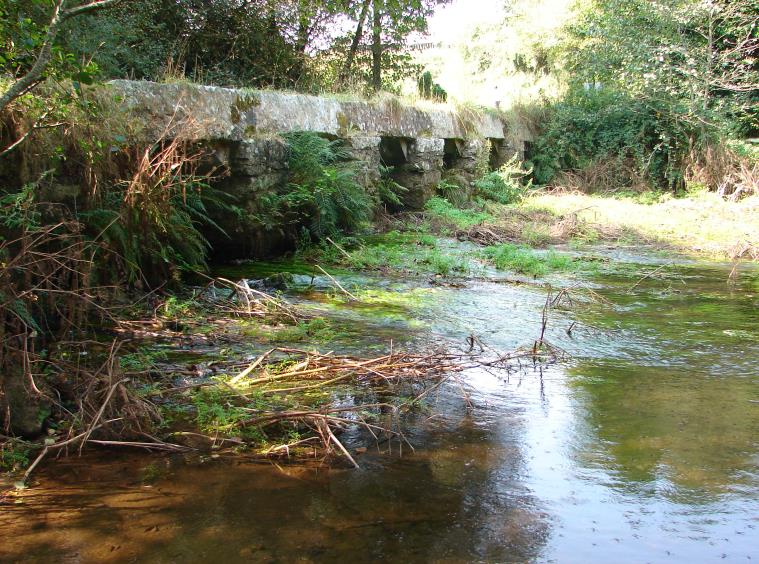
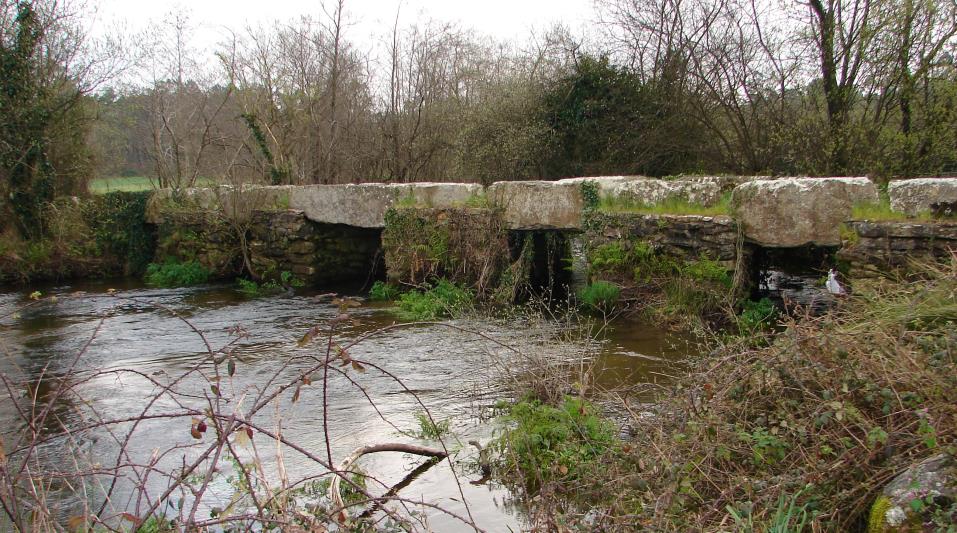
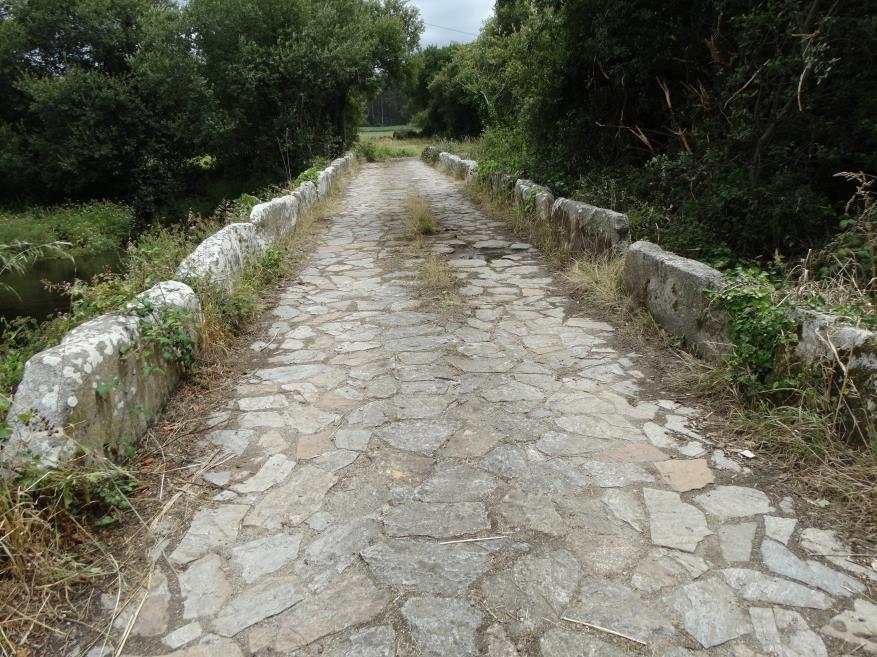
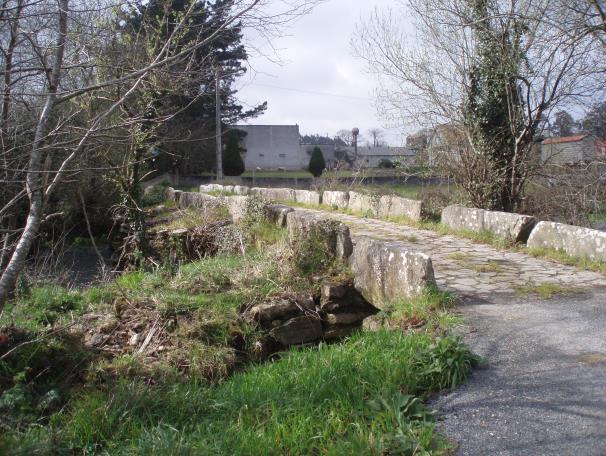
Until the construction of the road from Zas to Baio, Vilar was an important point on the royal road between Santiago and the central area of the Costa da Morte. It is thought that the old bridge in the village of Vilar may originally have been Roman.
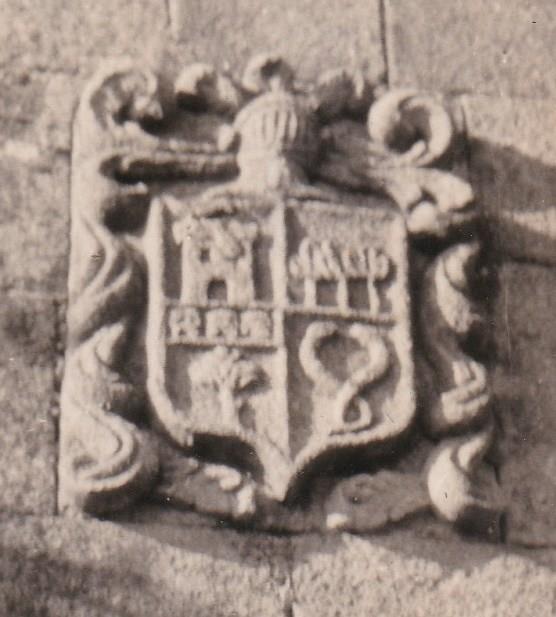
The noble Pazos family, which later spread through the lands of Soneira and Nemancos and intermarried with other important noble families in the area, has its origin in Pazos.
Although, due to special circumstances, he was born in Madrid, a very important figure for this parish was José López Pérez, son of a sergeant in the Spanish army originally from Artón, who became president of the Centro Gallego de La Habana (1907) and co-founder of the Real Academia Galega (1906), also in Havana. He was the one who brought the mortal remains of Manuel Curros Enríquez from that city to A Coruña (1908). He felt so closely linked to Artón – as he had spent part of his childhood here – that on this trip in April 1908 he visited the village with his father, where he was reportedly received in triumph.