
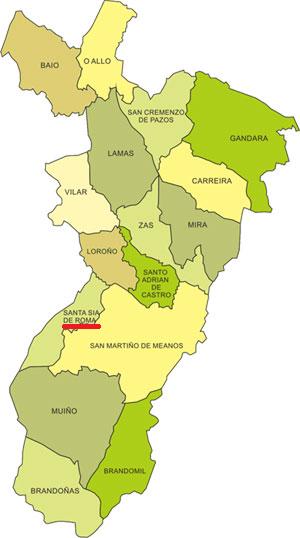
This is a parish located in the western area of the municipality; it has only two settlements (Santa Sía and Rus) and had 79 inhabitants in 2016.
Santa Sía de Roma is one of the hagiotoponyms —place names derived from the name of a saint— in the municipality of Zas. It should be clarified that the hagiotoponym is only Santa Sía, since, contrary to what was thought, this Roma that accompanies the saint’s name is not a toponym, not a place name, but simply an addition which, around 1570, was attached to the patron of the parish by order of some ecclesiastical authority (perhaps the archbishop of Santiago himself). This is one of the surprises or new findings presented in this new instalment of “Zas polo miúdo”. Until that date in the last third of the 16th century, the parish appears in documents (in Latin, in Galician and later in Spanish) only with the saint’s name on its own: Santa Cecilia, Santa Cecía, Santa Cía or Santa Sía. From 1570 onwards, it appears with the added “de Roma”, which undoubtedly was meant to refer to the origin of the saint venerated in the church: the Roman martyr of the 3rd century, who would later be chosen as the patron saint of music. As for the place name Rus, according to F. Cabeza it may derive from *(villa) Ruderici or from Rudericus (“estate, rural household of Rodrigo”).
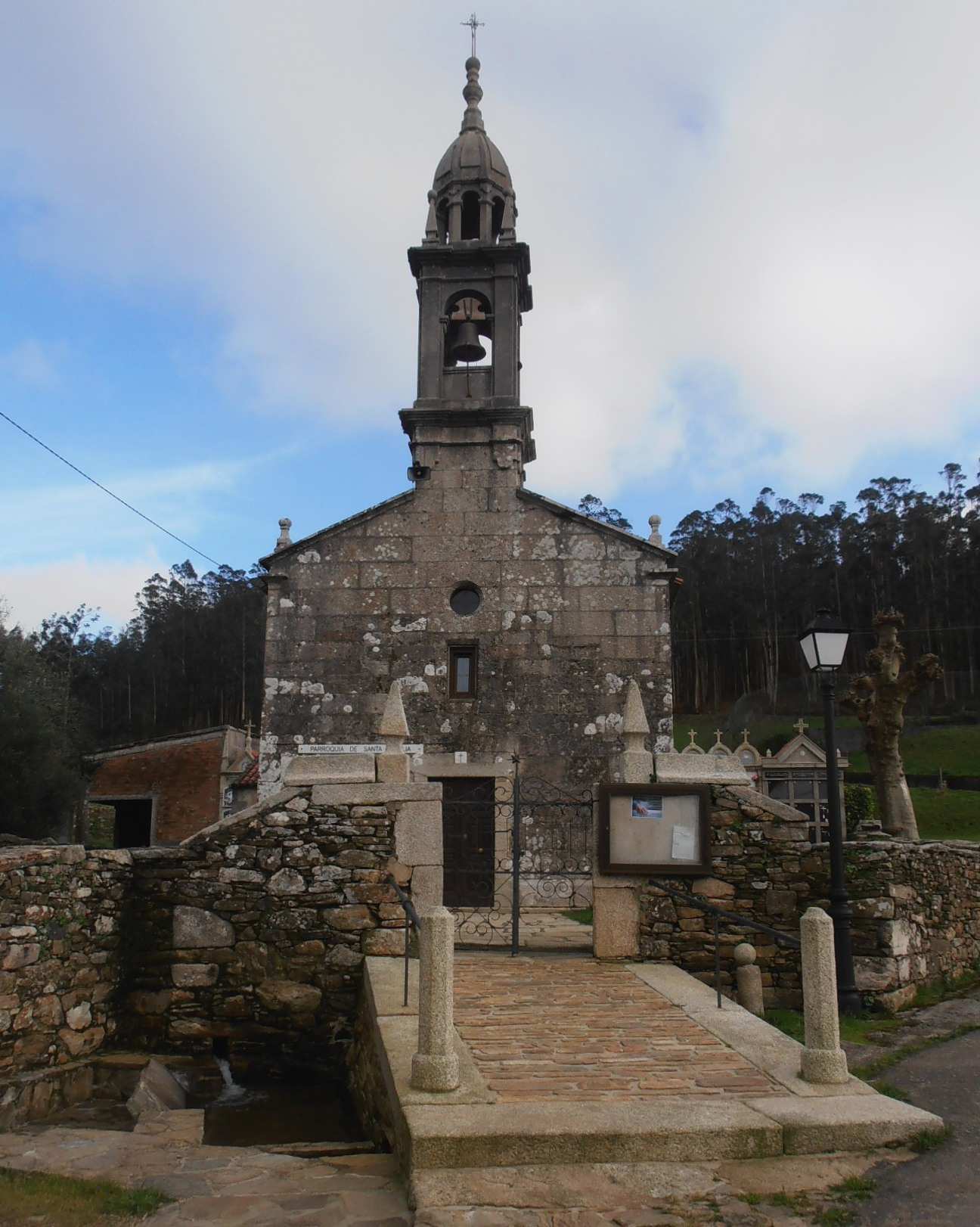
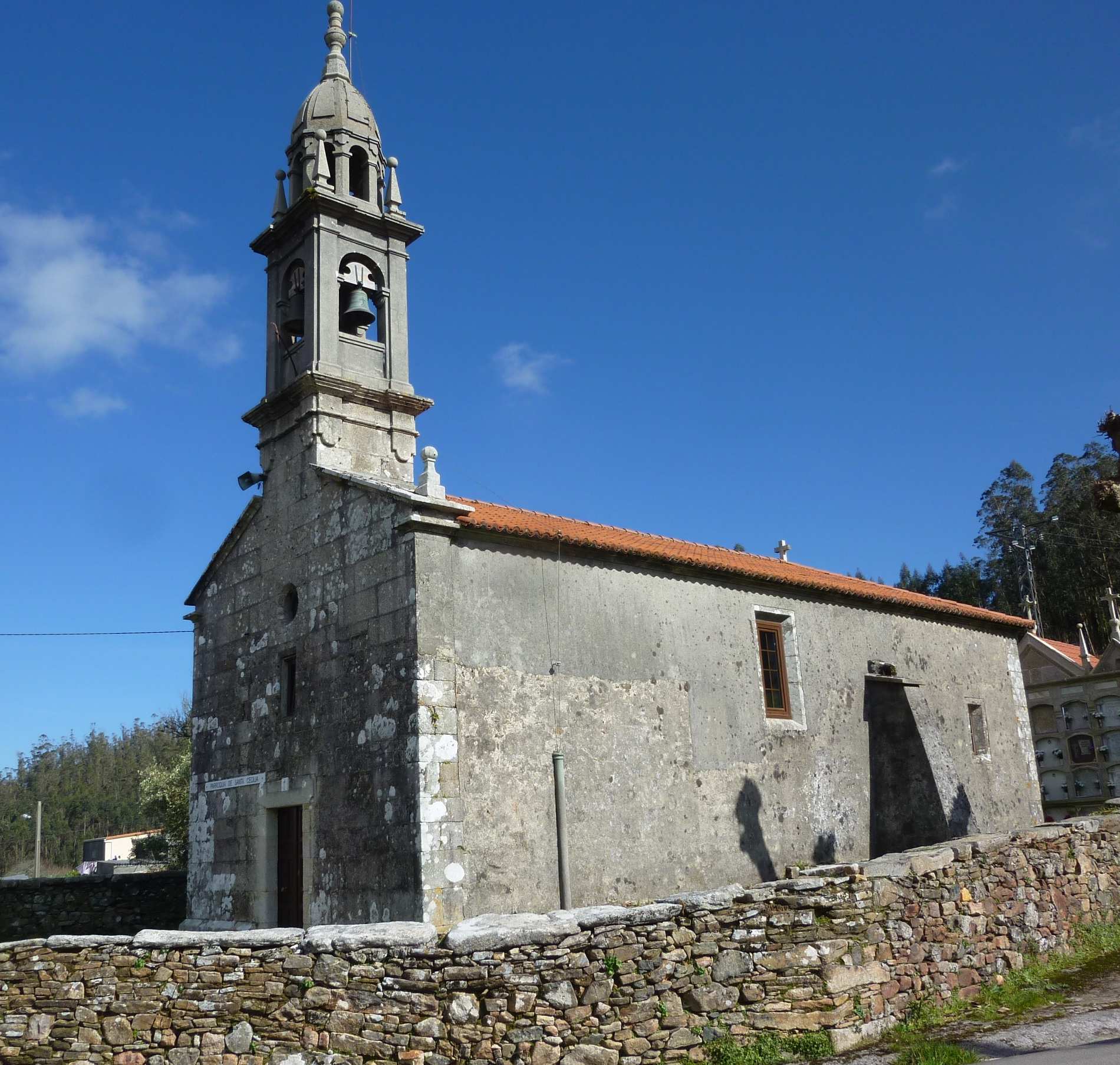
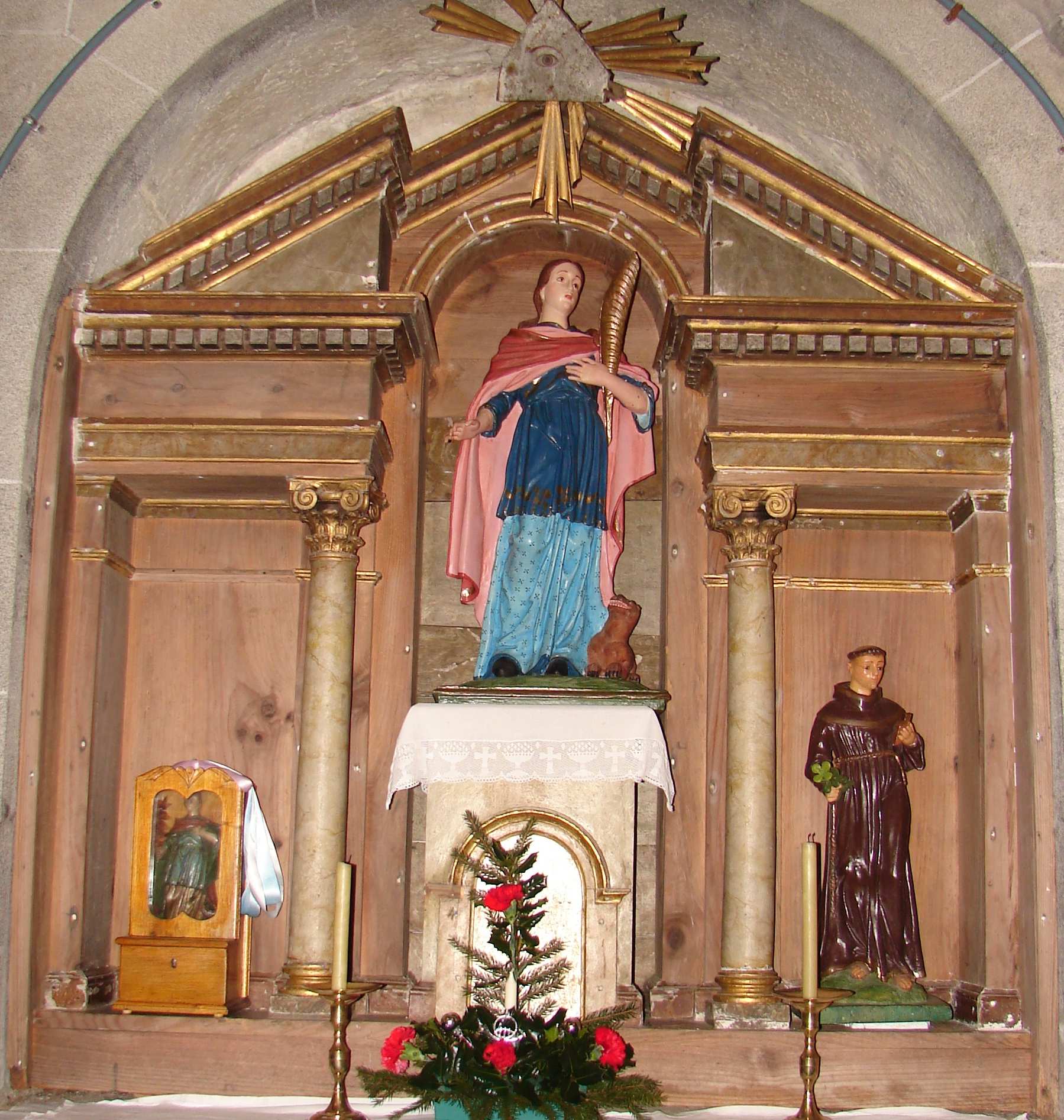
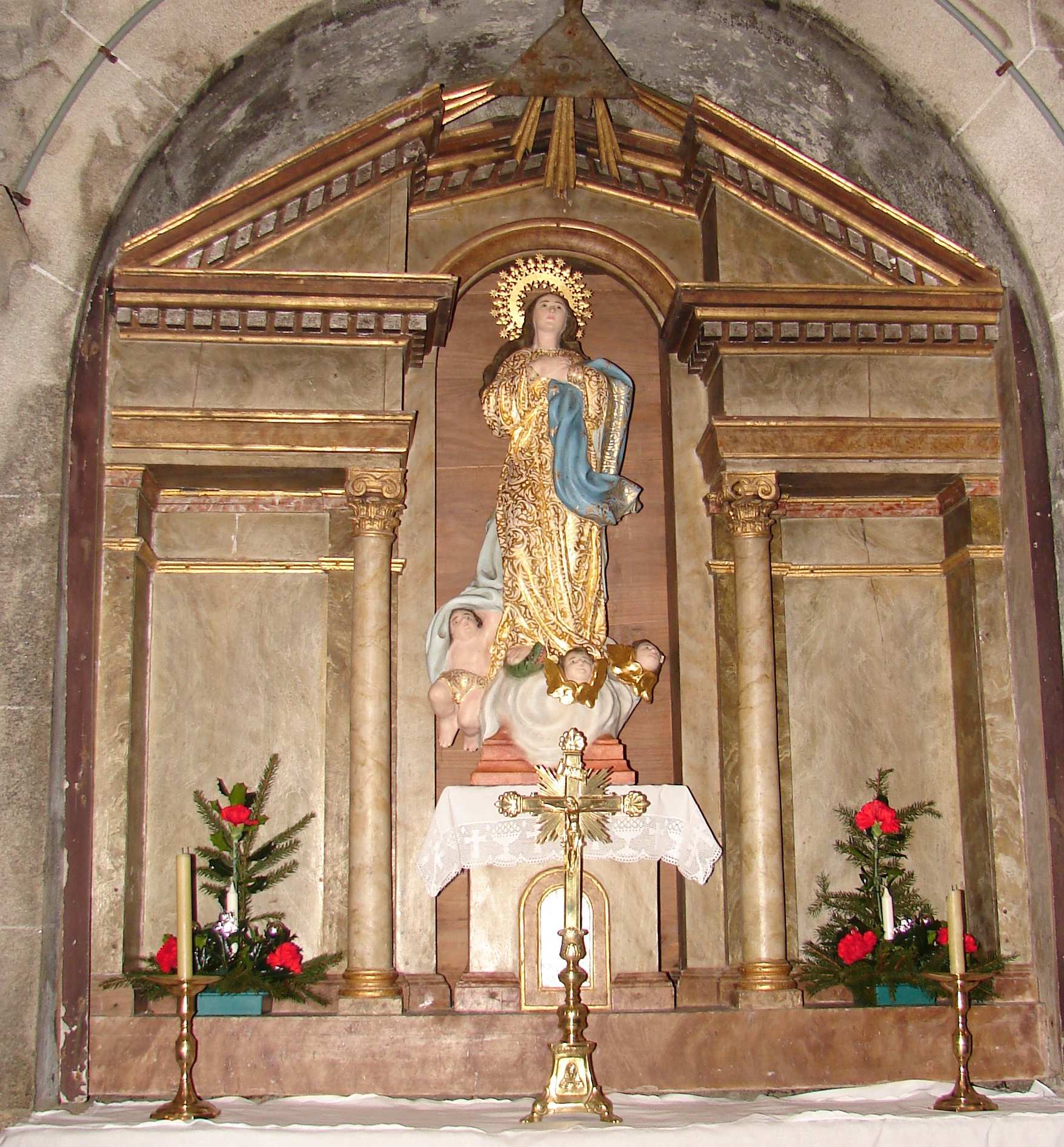
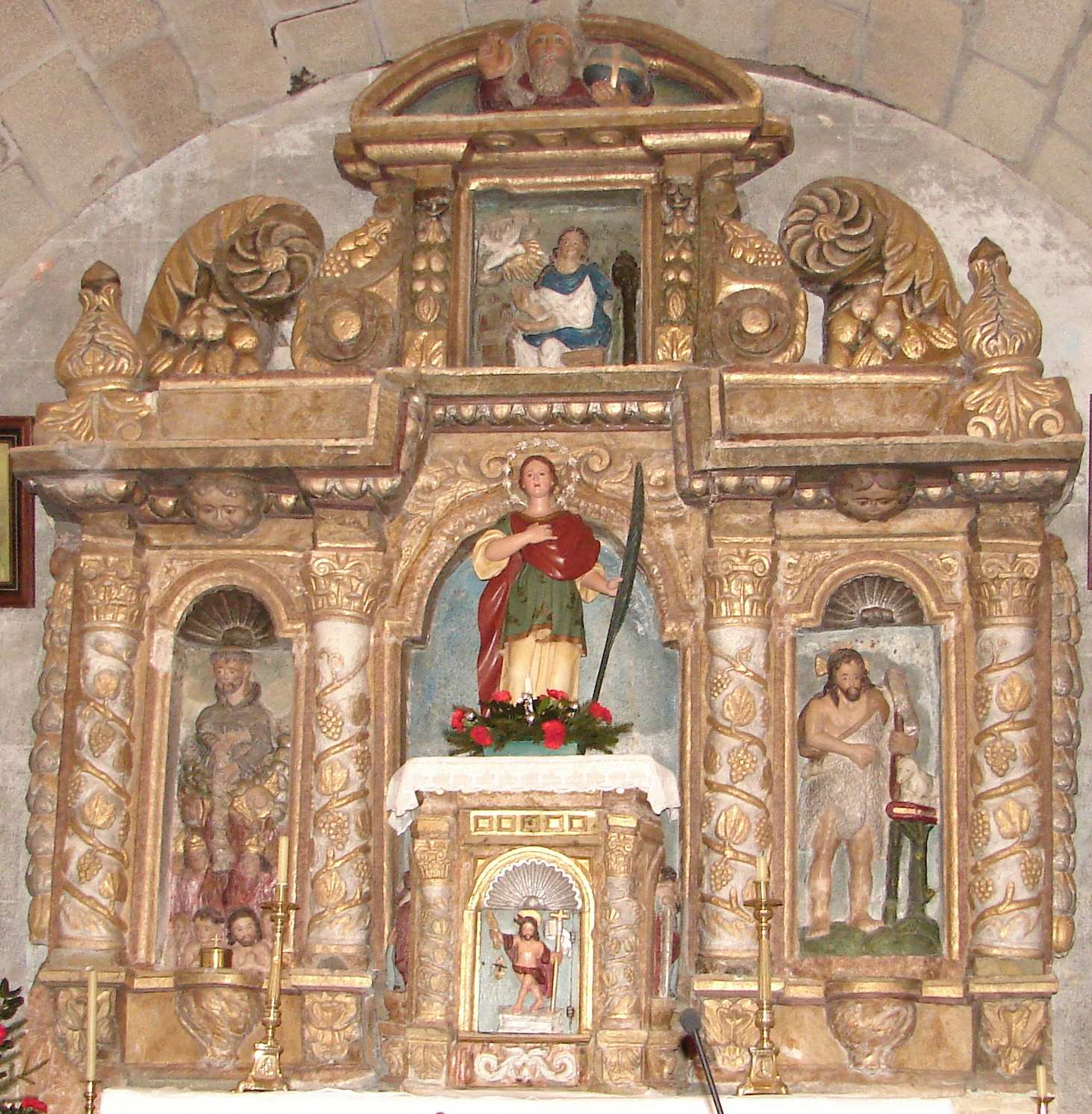
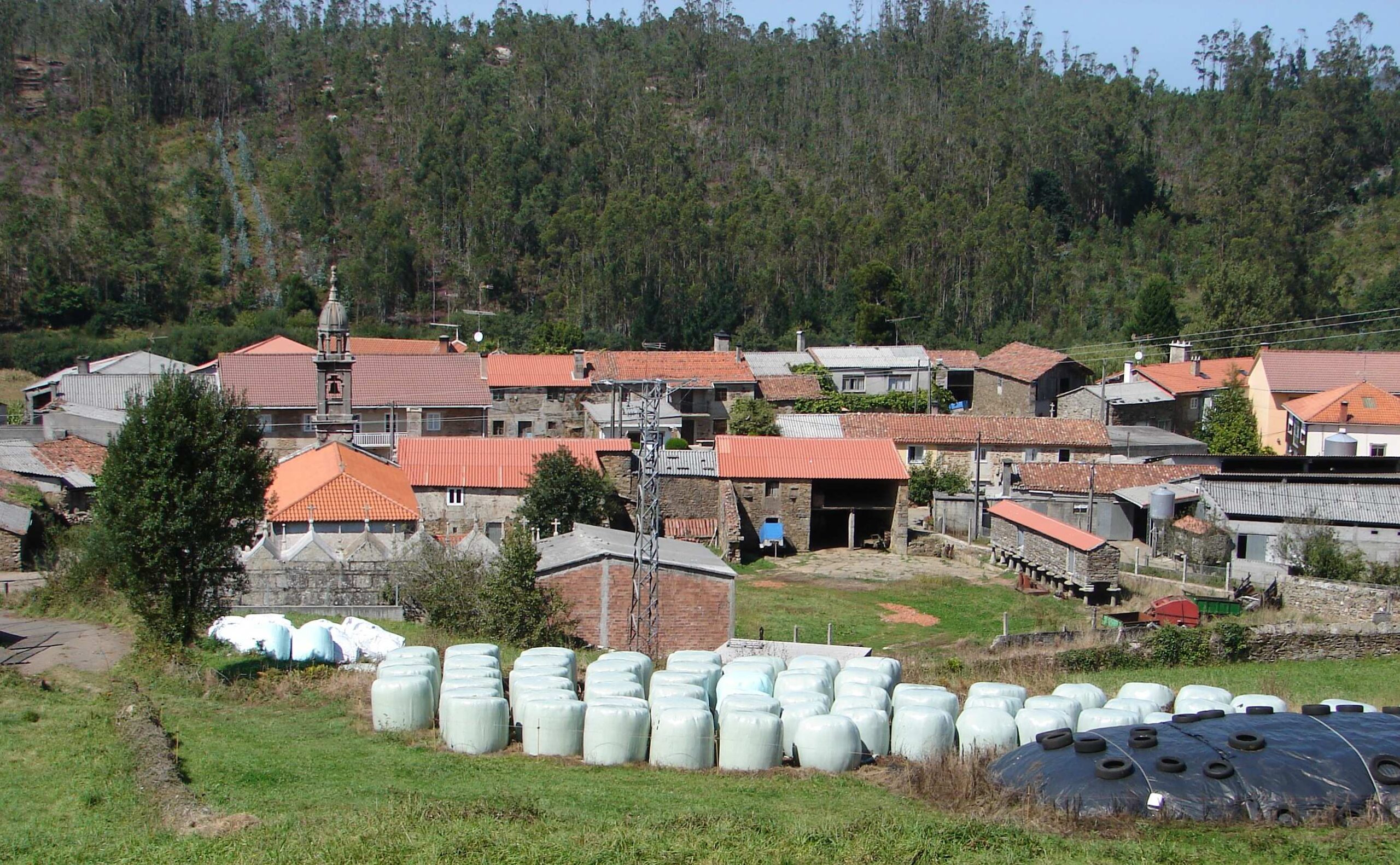
The parish church is Baroque in style, built in the 18th century, and is perfectly integrated among the houses, where its tall bell tower stands out, presiding over the whole. Inside, the main altarpiece, made of granite stone, is particularly noteworthy. Its main interest lies in the building material, since there are not many stone altarpieces in early-18th-century Galician Baroque.
There are also two stone crosses (cruceiros): the one at the church, now located on the southern side of the churchyard (dated 1930, according to the inscription on the base), and another one in a small square in the middle of the village.
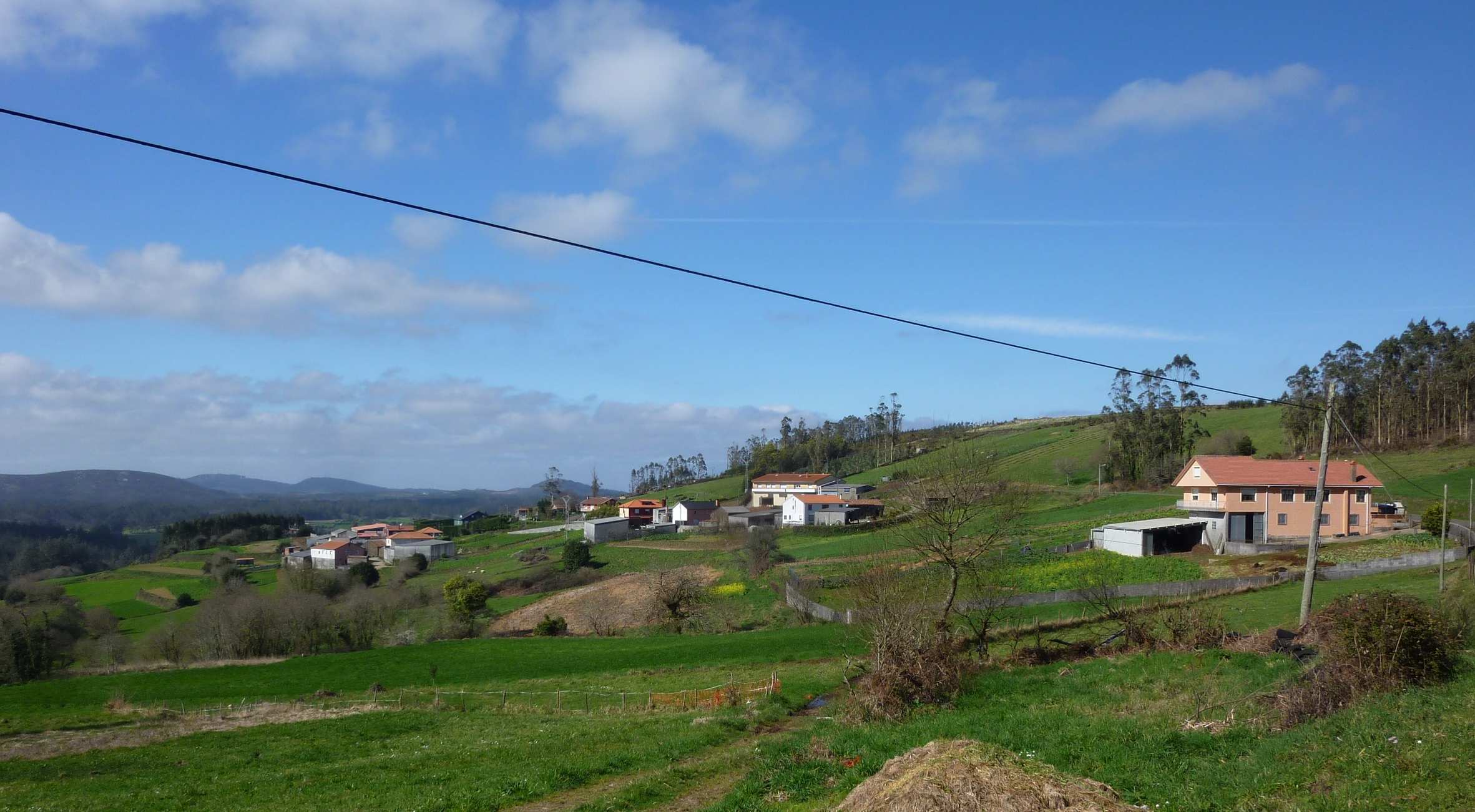
The village of Santa Sía is one of the most beautiful spots in the municipality. It is one of the few places in these western areas of Galicia that still shows a compact settlement pattern, as few houses have been built outside the core. They preserve, with a few exceptions, their traditional structure: rectangular stone houses with gabled roofs, some in dressed stone masonry and the rest in rubble stone, reserving ashlar work for openings and corners.
During the Ancien Régime this parish belonged to the jurisdiction of Vimianzo, governed by the Counts of Altamira and, in 1842, Santa Sía was on the verge of becoming the capital of the Concello de Roma, which would have included all the parishes of Zas and a large part of Vimianzo, following the council-reduction plan adopted by the provincial council. The project was never carried out.
![CURSO_DE_AUGA_AO_PE_DA_IGREXA_DE_ROMA[fotoEDR]](https://concellodezas.gal/wp-content/uploads/2021/05/CURSO_DE_AUGA_AO_PE_DA_IGREXA_DE_ROMAfotoEDR.jpg)
![LAVADORIO_A_RENTES_DA_IGREXA_DE_ROMA[fotoEDR]](https://concellodezas.gal/wp-content/uploads/2021/05/LAVADORIO_A_RENTES_DA_IGREXA_DE_ROMAfotoEDR.jpg)
![NUCLEO_DE_ROMA[fotoEDR]](https://concellodezas.gal/wp-content/uploads/2021/05/NUCLEO_DE_ROMAfotoEDR.jpg)