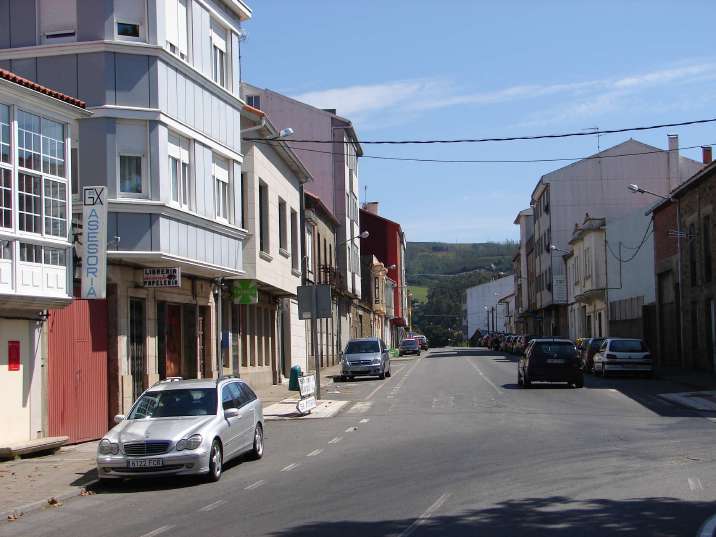
When the first municipalities were established in 1820, the parish of Zas was the capital of one of the three (Allo, Muíño and Zas) that would form the current municipal territory from 1836 onwards.
During the Ancien Regime it belonged to the jurisdiction of Soneira (which was under royal domain), in addition to that of Vimianzo, in which the presenteiros were the Caamaño de Romelle family.
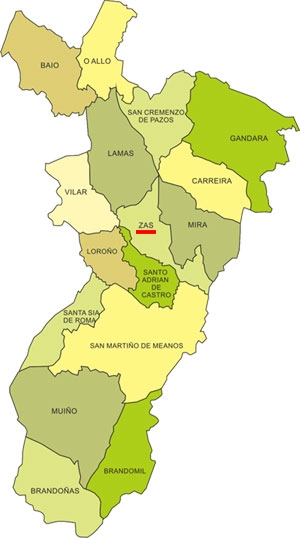
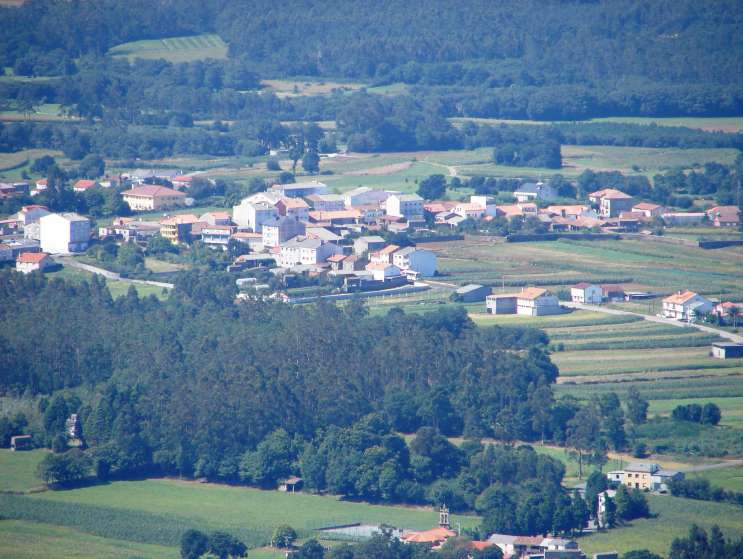
It covers approximately 10.2 km2 and is the parish in the concello that borders the largest number of others. In the spot known as A Pedra dos Cregos there is a point where four parishes meet: Carreira, to the NE; Lamas, to the NW; Mira, to the E and to the N, in addition to Zas itself. Very close by, to the N, lies San Cremenzo de Pazos, although without actually touching it. To the W it has a short stretch bordering the parish of Vilar. To the SE are Santo Adrián do Castro and San Martiño de Meanos. To the E are the parishes of Santa Sabiña, along a very short stretch, and Cícere, both belonging to the concello of Santa Comba.
Because of its elongated shape – from the concello of Santa Comba to the parish of Lamas – it displays a varied relief: level areas at considerable height on the boundary with Santa Comba; relatively steep slopes down to Vilar do Mato; and low, flat land in the central and western sectors.
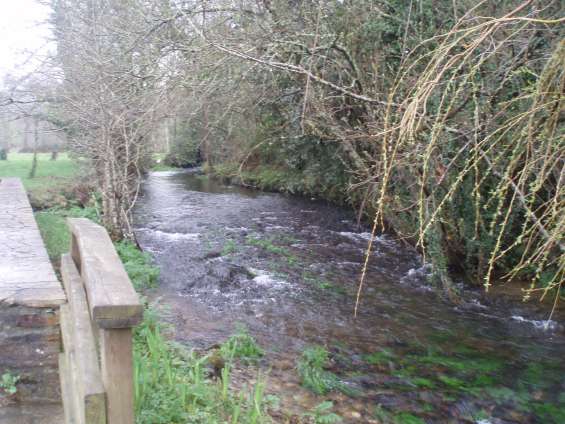
It is drained by the río de Zas – a left-bank tributary of the río do Porto (or río Grande) – and by the small Follente stream.
Geologically, it shows landforms and structures oriented from N to S, following the direction of the Hercynian folding, although most of the parish territory would be Precambrian or Cambrian in age. All of this forms part of the Noia Complex or Blastomylonitic Trough.
There are only three villages: A Toxa, Vilar do Mato and Zas. Its demographic evolution has been as follows: 11 households in 1607; 46 households and 159 inhabitants in 1753; 43 households in 1769; 24 households and 120 inhabitants (1836); 26 households and 128 inhabitants (1845); 439 inhabitants (1928); 636 (1970); 558 (1981); 487 (1991); 497 (2001); 517 (2006); 525 (2011); 471 (2014); 461 (2015) and 451 inhabitants (2016).
There was continuous growth from 1900 to 1960; in the years after 1960, after a slight drop until 1991, the population stabilised and in 2012 it even had more inhabitants than at the beginning of this century. Only in the last four years has it clearly begun to lose population.
As for the name of the parish and the concello, it was thought that it might come from the Germanic *SALA, meaning ‘manor house, principal residence’, but at present some believe that it may come from the Latin *SALIX, in its derived form SALICE (willow).
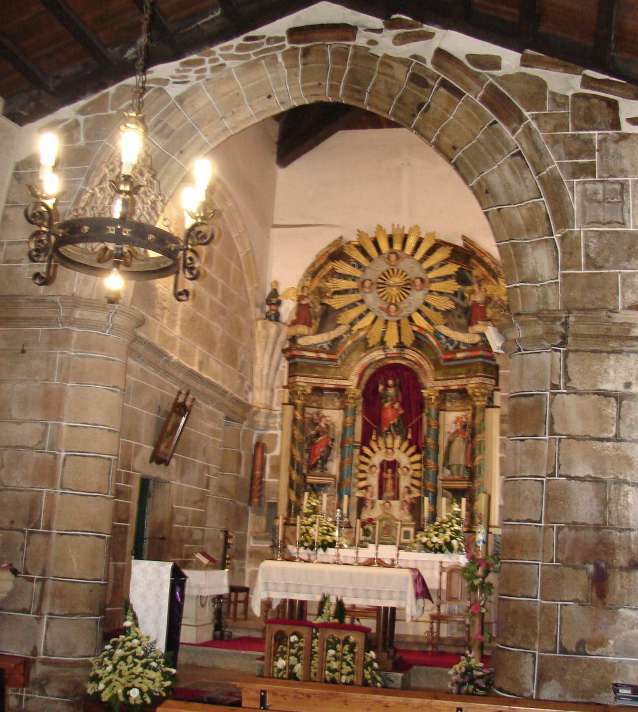
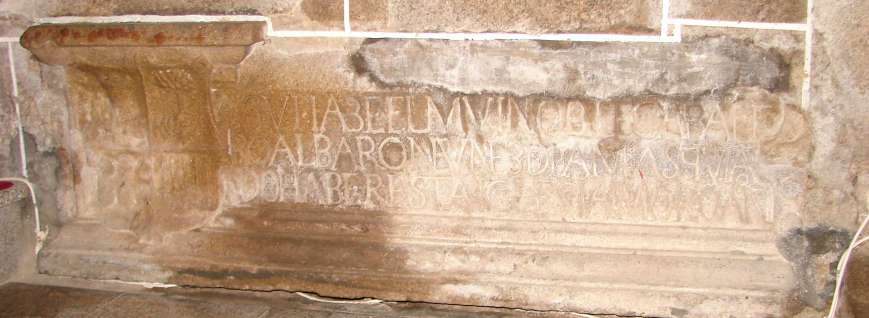
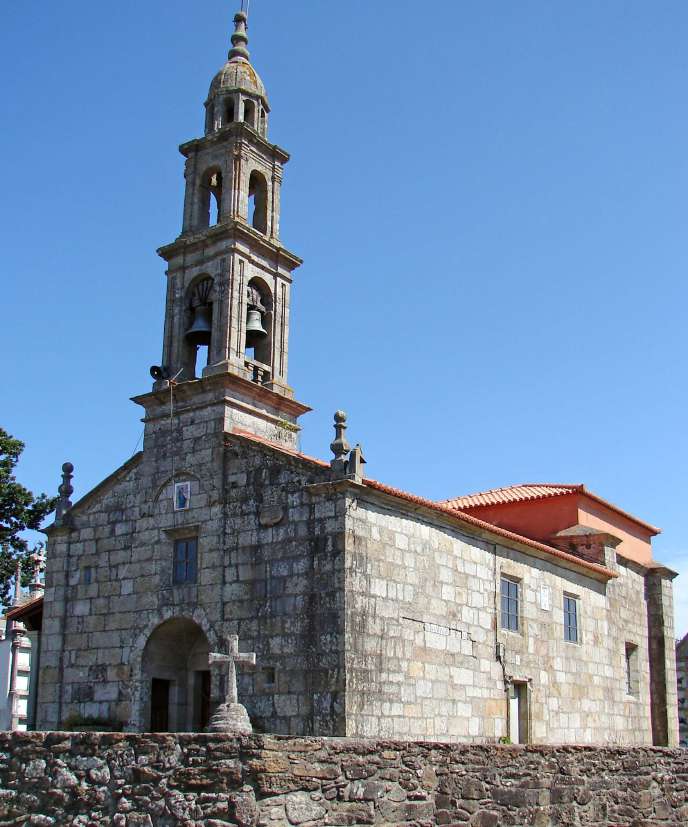
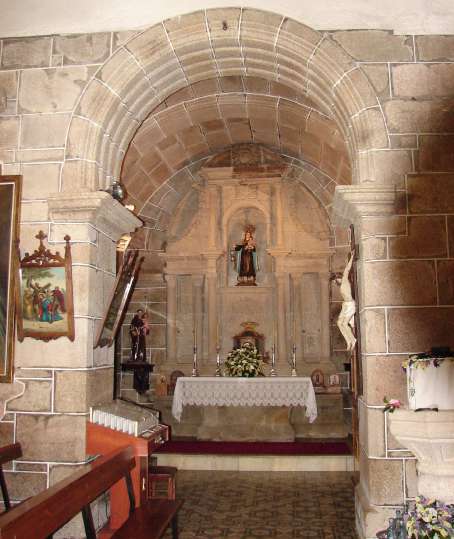
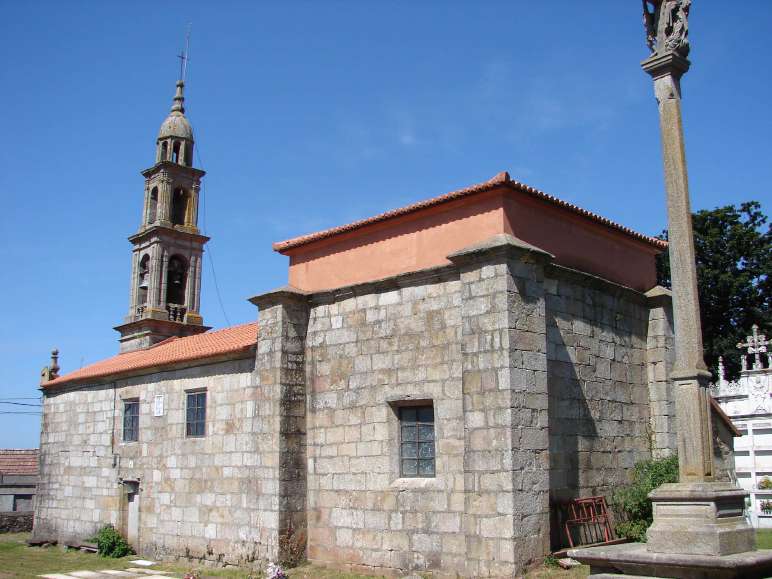
The parish church, dating from 1540, was altered in 1618 – under the direction of Jácome Férnandez, master builder of Santiago Cathedral – and again in 1791, 1815, 1838, 1848 and 1987. The belfry dates from 1893. The ground plan is that of a hall church, with a square main chapel and a rectangular nave. It was commissioned by the nobleman Álvaro Núñez de Lamas, and the stone tombs of both him and his mother are preserved.
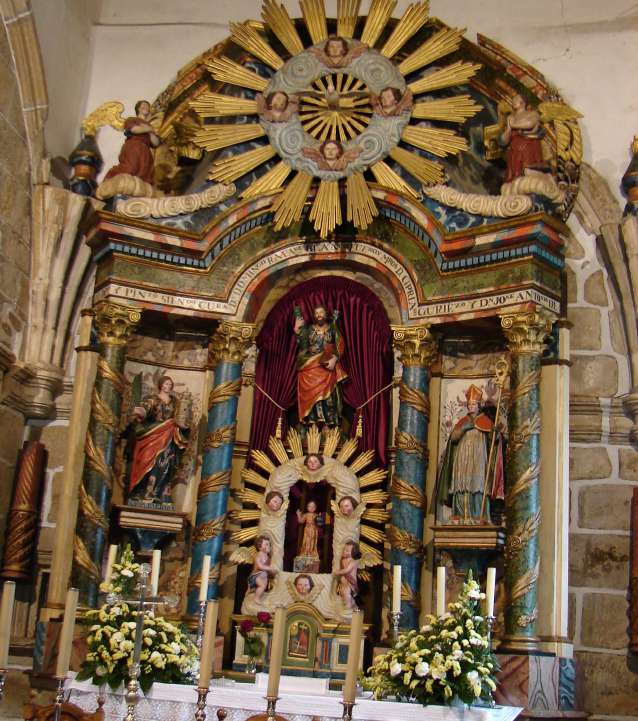
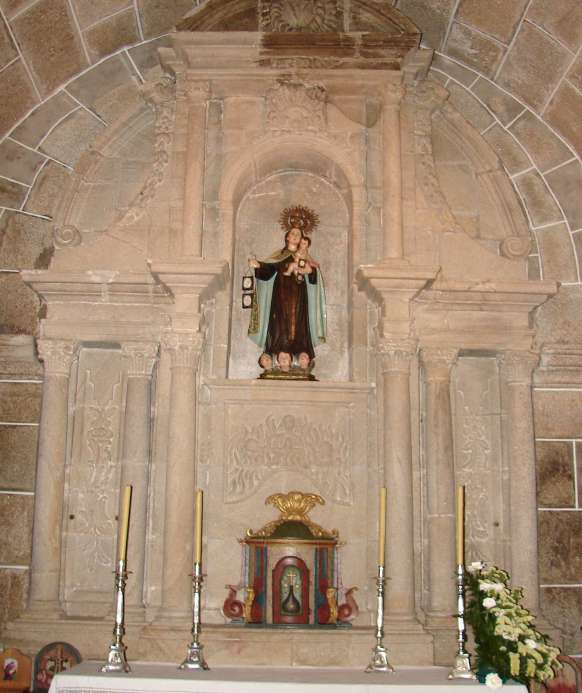
Noteworthy features include the main altar – which contains the images of Santo André, Santa Bárbara and Saint Blaise (san Brais) – in a late Neoclassical style, and the stone altarpiece of Our Lady of Mount Carmel, the work of the artist from Sandrexo Francisco Castro Agudín, which still retains some Baroque traits but is predominantly Neoclassical.
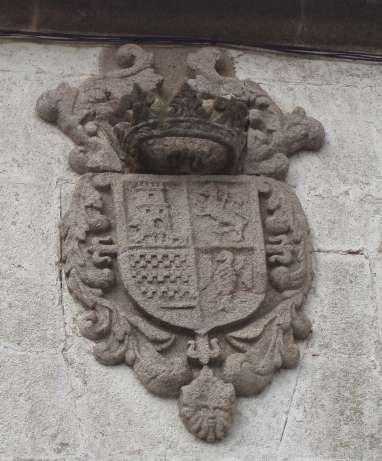
The noble Lamas family, originally from the parish of the same name, played a major role here: they ordered the construction of the church, founded the entails (majorats) of Sas and Brandomil and eventually became related by marriage to the Caamaño de Romelle family, who went on to be the presenteiros.
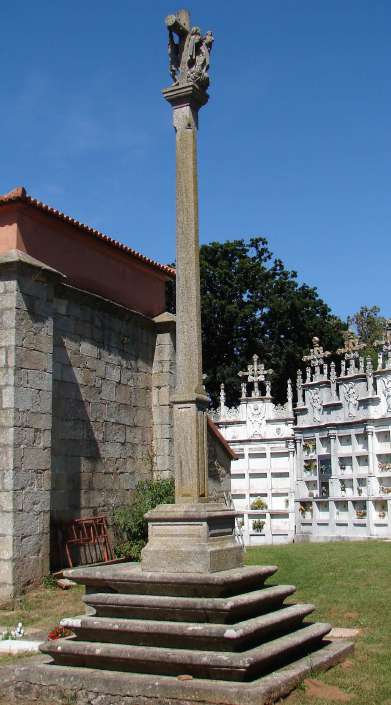
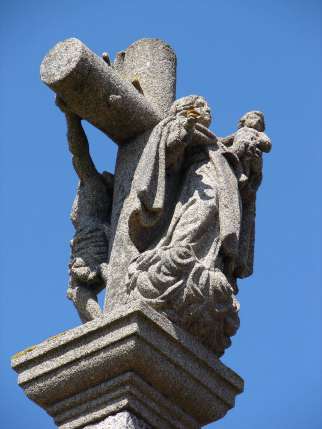
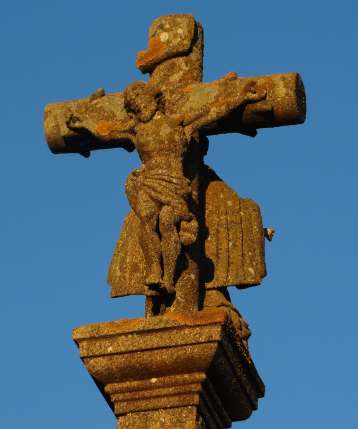
In the south-eastern part of the churchyard there is a finely crafted stone cross (cruceiro) with the figures of Christ and Our Lady of Mount Carmel holding the Child; the figures were carved by Francisco Rodeiro, a sculptor from Santiago de Compostela, in 1857.
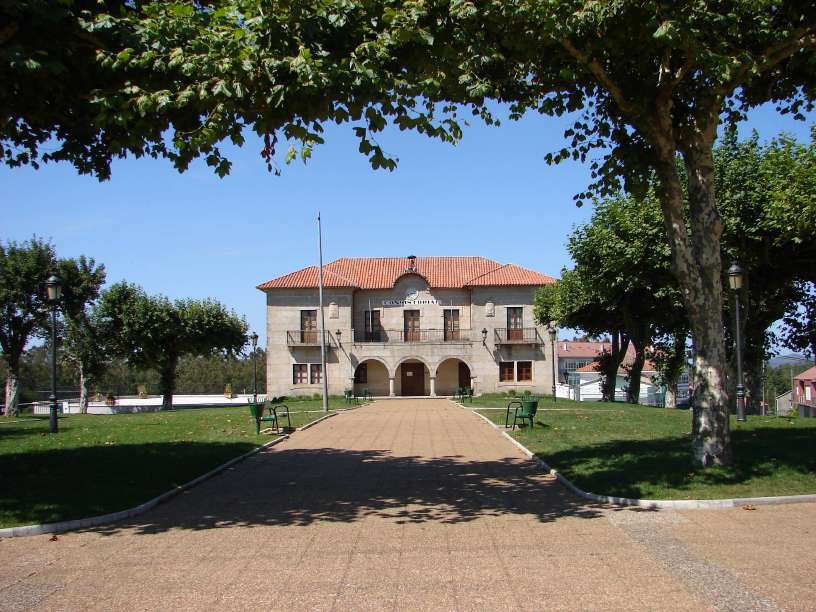
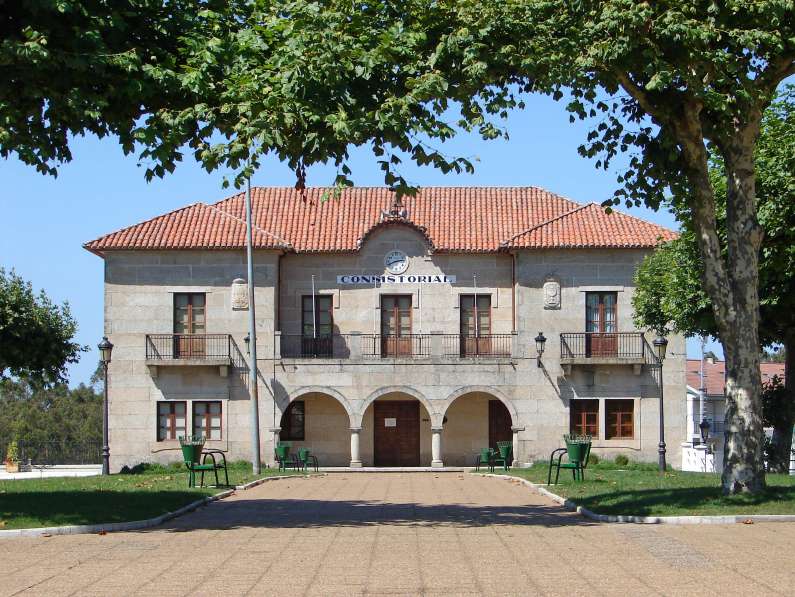
In the so-called Campo do Carme stands the Casa do Concello (Town Hall), which was opened in 1951 after around a hundred years of formalities. It imitates the structure of the Torres do Allo and is one of the most beautiful in the whole Costa da Morte. The master stonemason who built it was Severino Abelenda Graíño.
In the early decades of the 20th century it had two fairs: the one moved from A Santa (Muíño) and the one transferred from Gontalde (Mira), the latter lasting significantly longer than the former.
Among the local figures of note we should mention Manuel María Pose de Prado, from Vilar do Mato, who emigrated at a very young age to Argentina, where he amassed a considerable fortune that he later left to charitable works, including the creation of a Commercial College in Zas that never actually came into being.
We should not forget the Festa da Carballeira, a folk pilgrimage festival known throughout Galicia for the quality of the musicians who perform there and which has already reached its 34th edition.