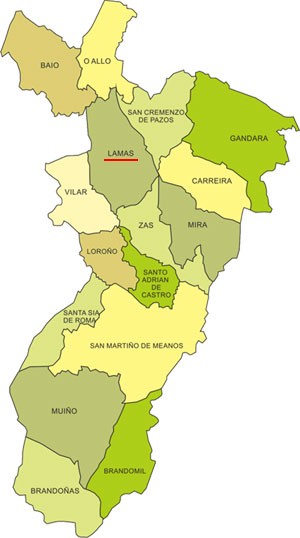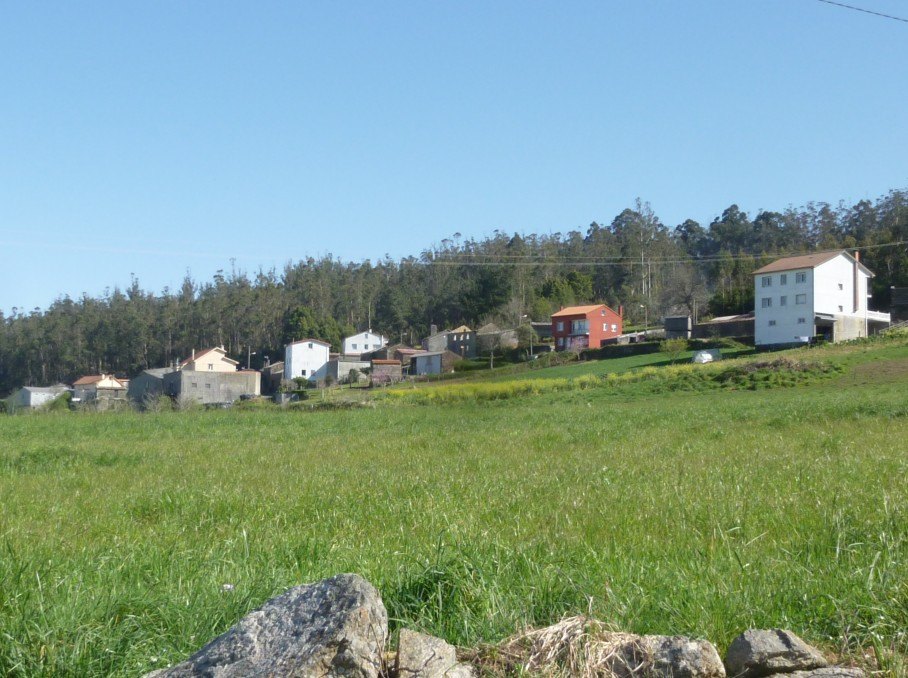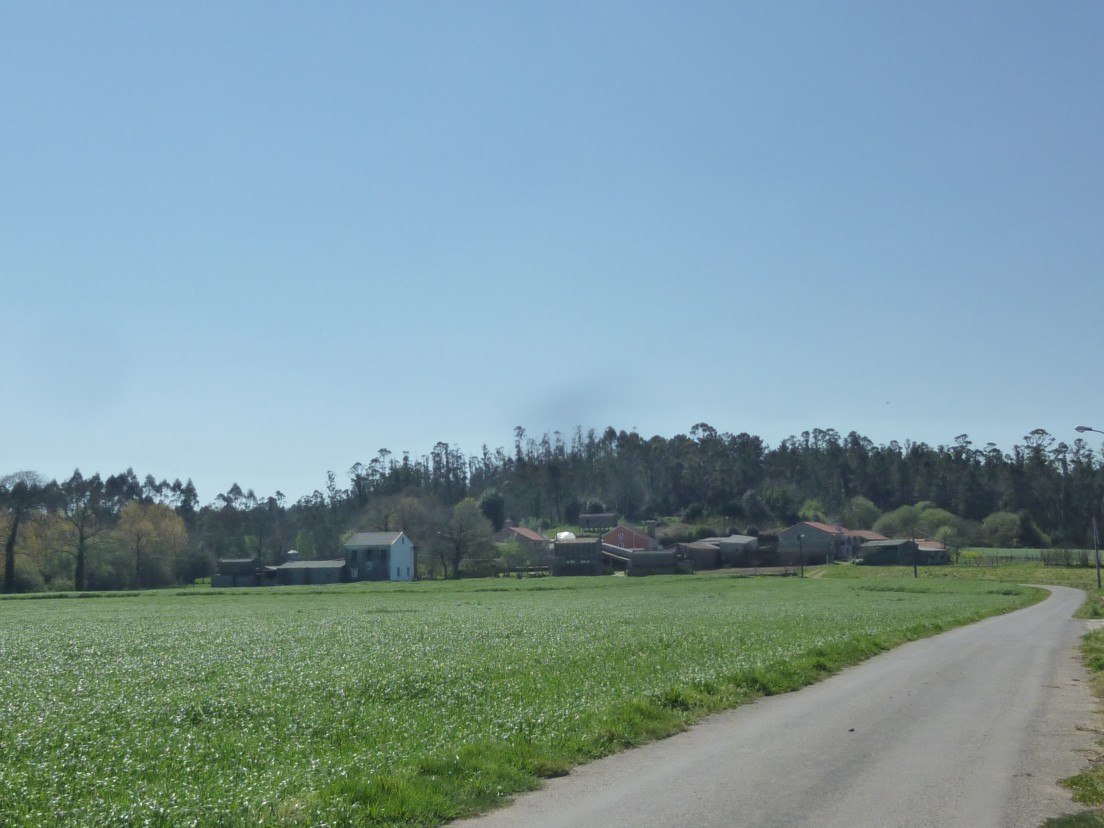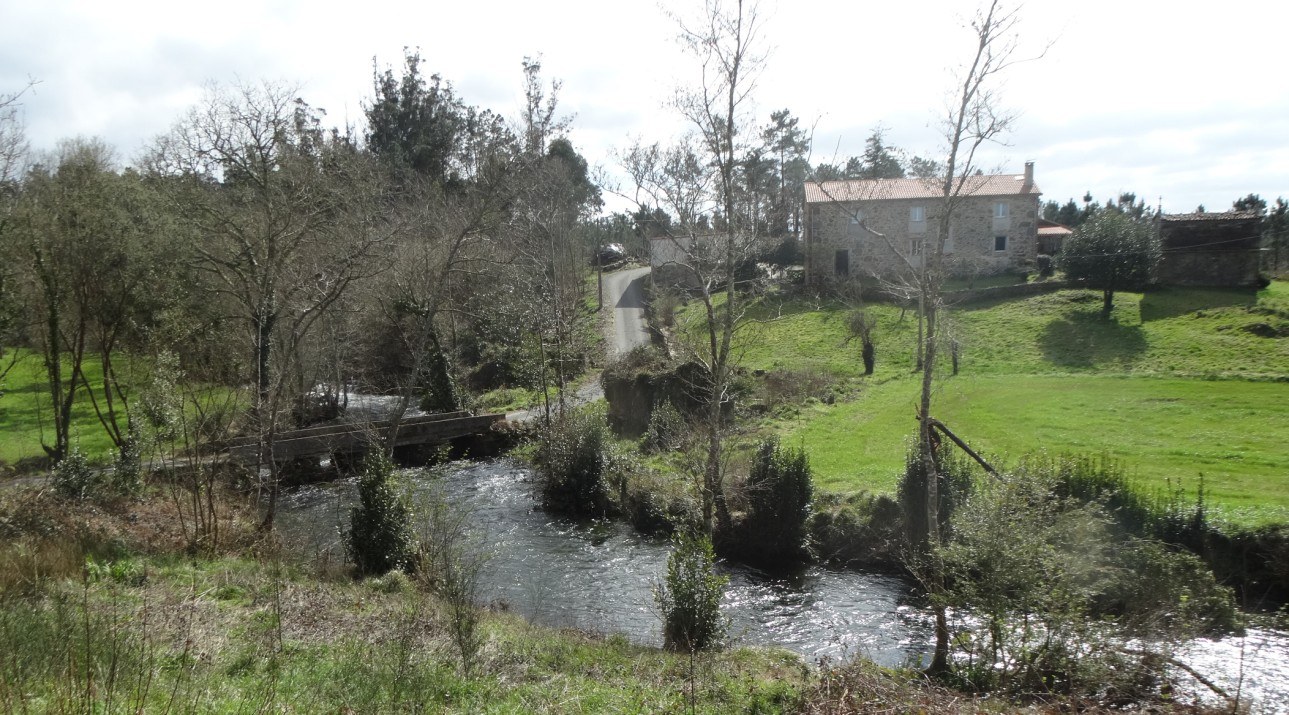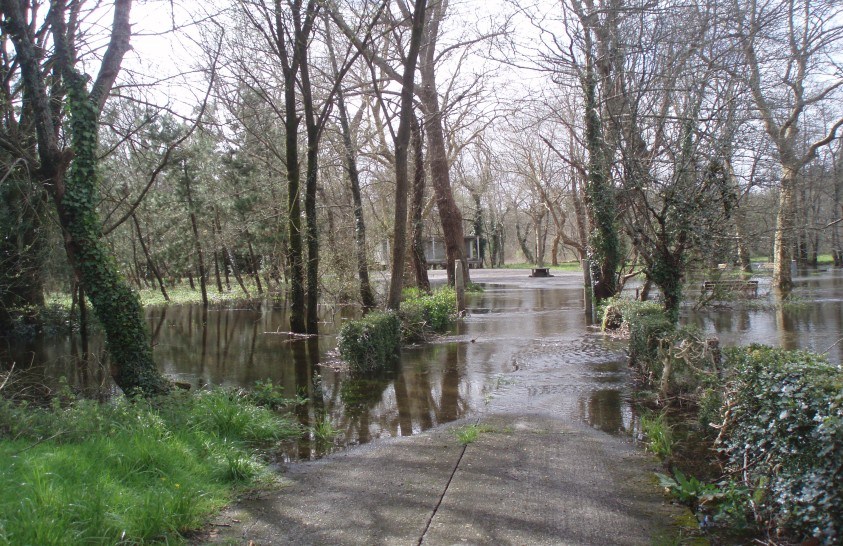
It forms part of the group of parishes located in the north-western area of the concello of Zas, arranged around the middle valley of the río do Porto or Grande. Its geography is typical of the central area of Terra de Soneira: a very flat surface watered by the gentle waters of the río de Zas or de Lamas (running south–north), already in its final stretch.
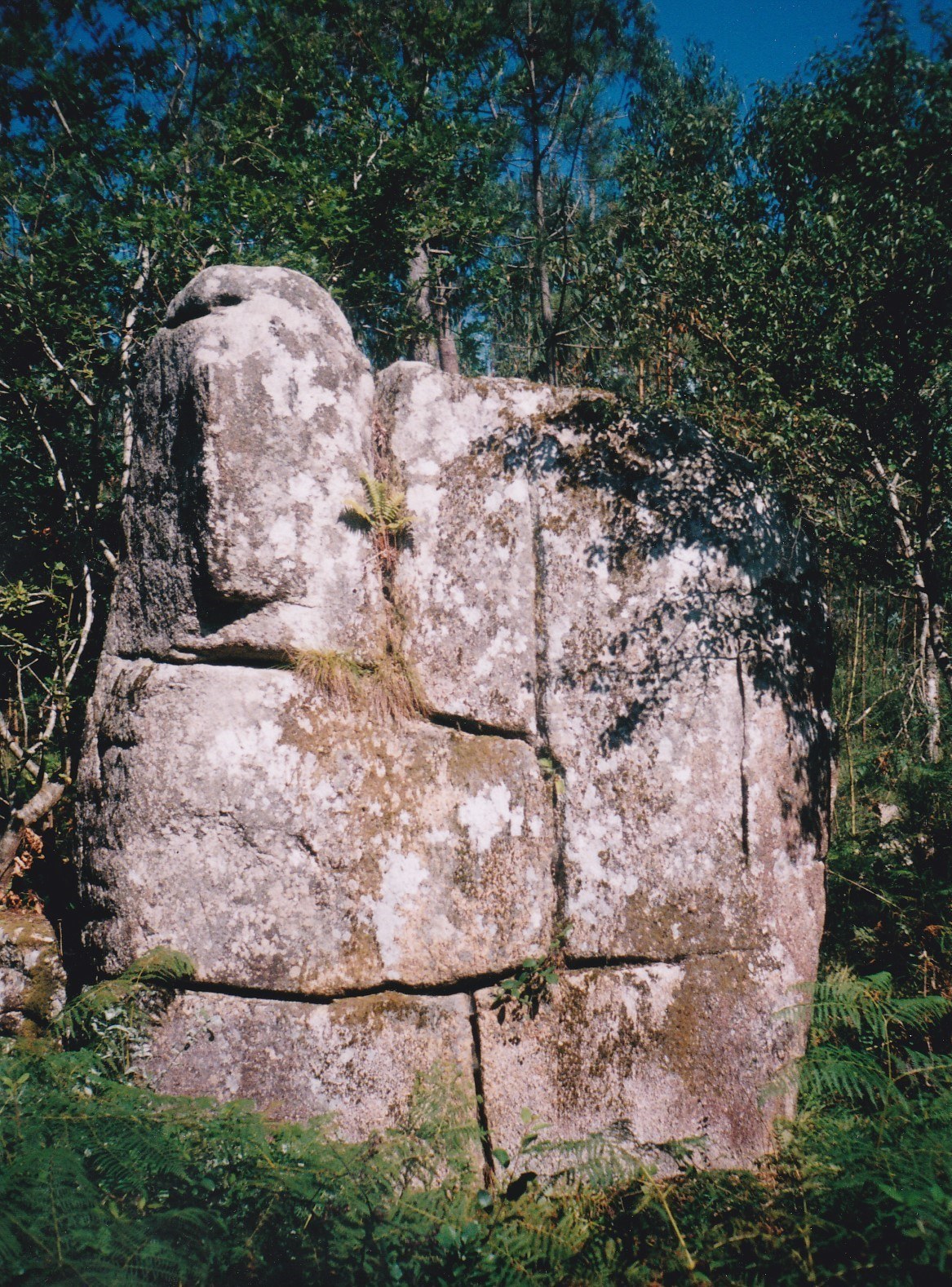
It borders, over stretches of varying length, seven parishes in the concello of Zas (Baio and O Allo to the N; San Cremenzo and Carreira to the E; Mira, at a single point – the Pedra dos Cregos – to the SE; Zas to the S and SW, and Vilar to the S and SE) and one parish in the concello of Vimianzo: Bamiro (to the W).
It has an area of about 7.1 km2, very similar to other parishes in the concello such as O Allo, Brandomil, Brandoñas or Santa Sía (all of them around 7 km2).
It was united with Baio until 1793, with Lamas as the mother parish. Under the Old Regime it formed part of the jurisdiction of Vimianzo, in the lordship of the Count of Altamira.
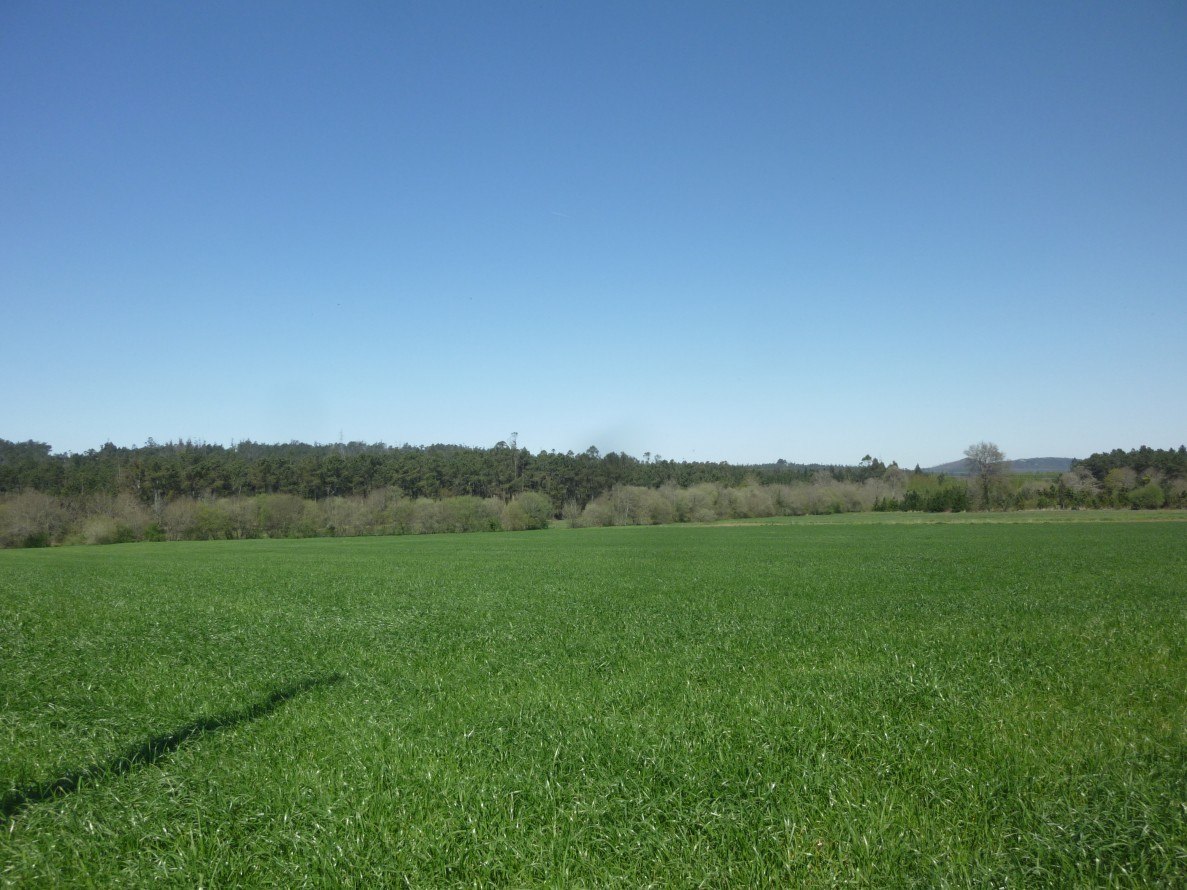
As regards its relief, what stands out most is how flat it is. The land is completely level, except along the boundaries, where there are small hills that separate it from the parishes of Vilar and Bamiro to the W, and San Cremenzo to the E. In both cases these are very minor elevations, slightly higher in the latter case, but only a few metres above the central part of the parish. Almost all of its territory consists of a very flat-bottomed valley where changes in elevation are barely perceptible.
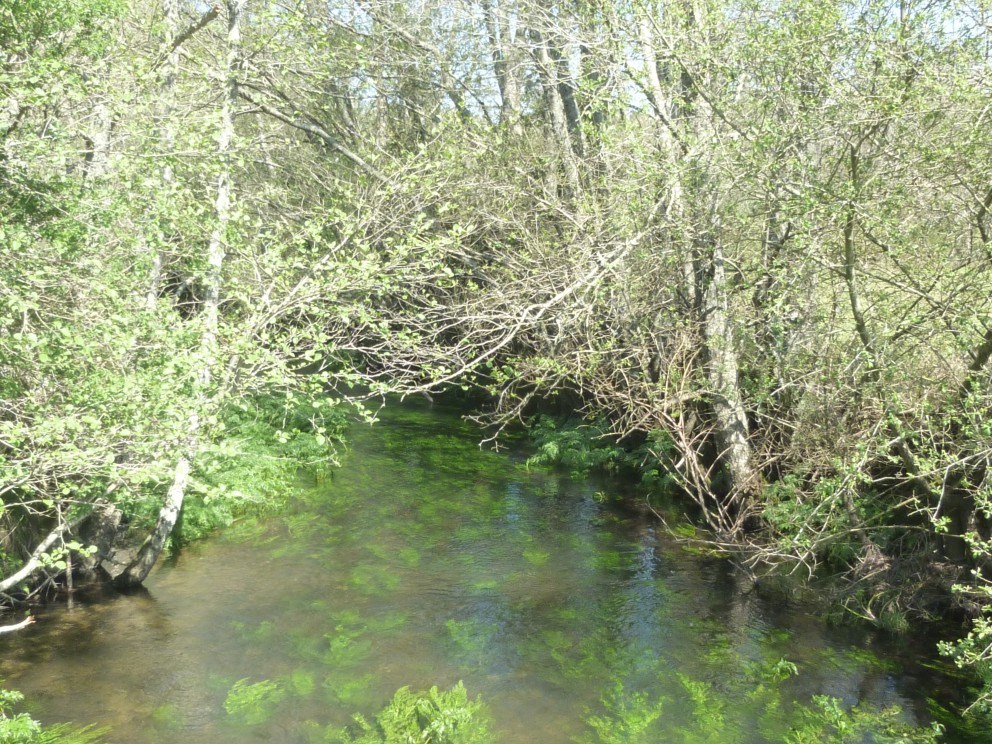
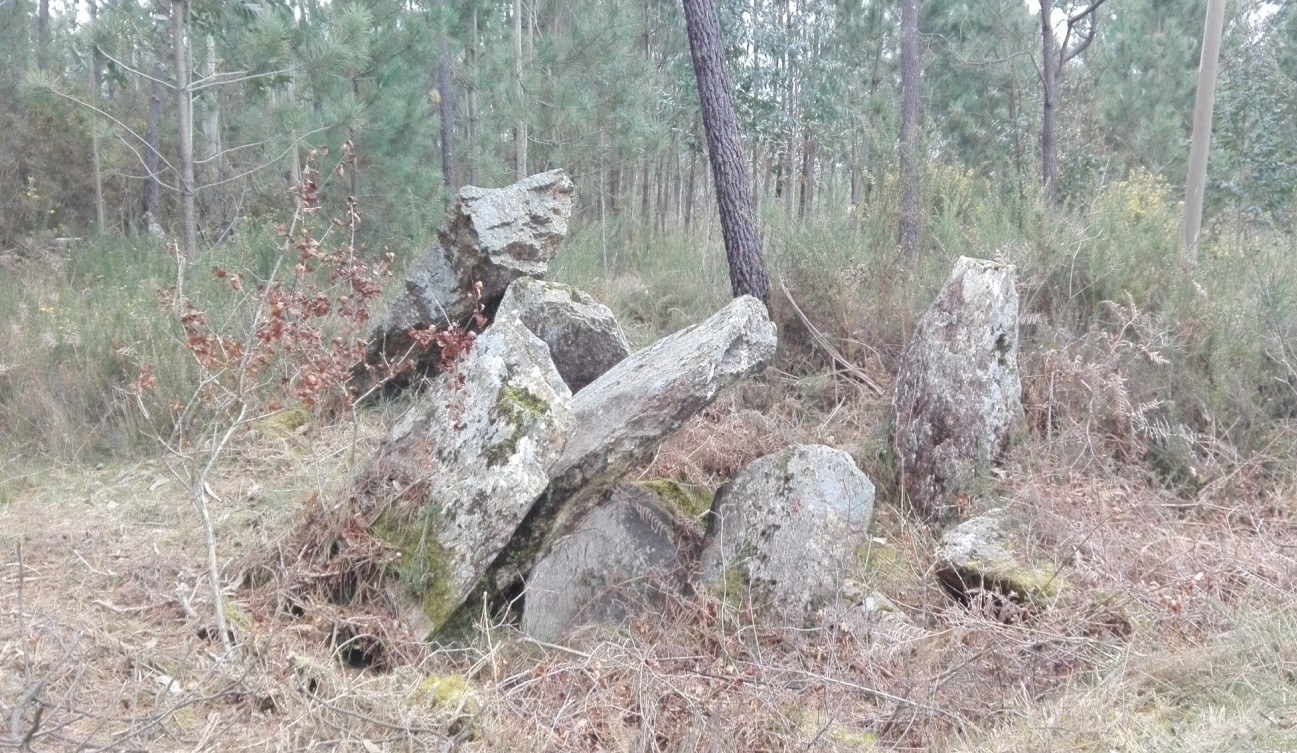
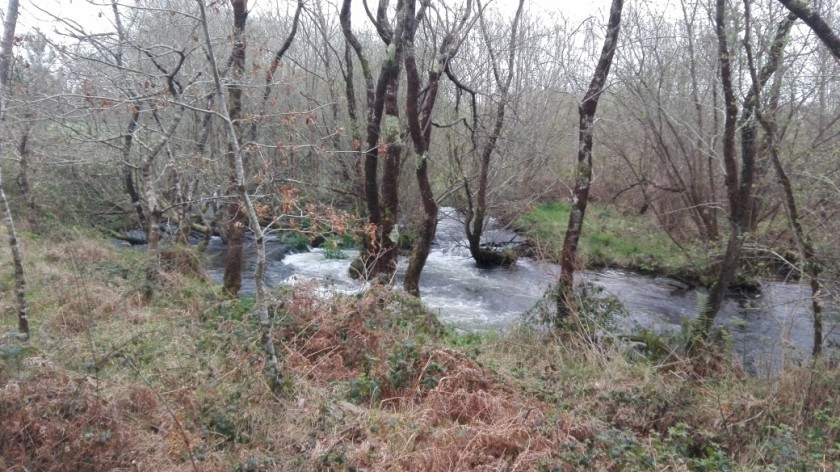
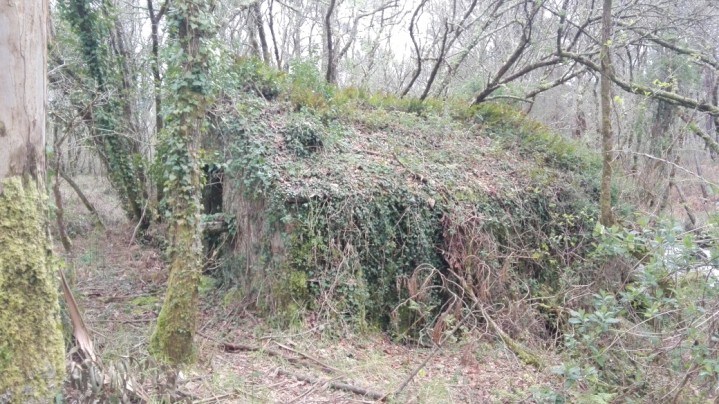
Its main watercourse is the río de Zas or de Lamas – which rises in the parish of San Martiño de Meanos – and is one of the most important tributaries of the río do Porto. It is its longest tributary (16.4 km). This is a predominantly lowland river, with only small drops in elevation in the Pedra Vixía area before joining the main river, already in the lands of Baio. In this area, on its right bank, lies the dolmen of Pedra Moura de Pedra Vixía, in a lamentable state of preservation; as the best-known megalithic monument in the concello of Zas after the Arca da Piosa, it would deserve greater official attention, with improved access and clearance of undergrowth.
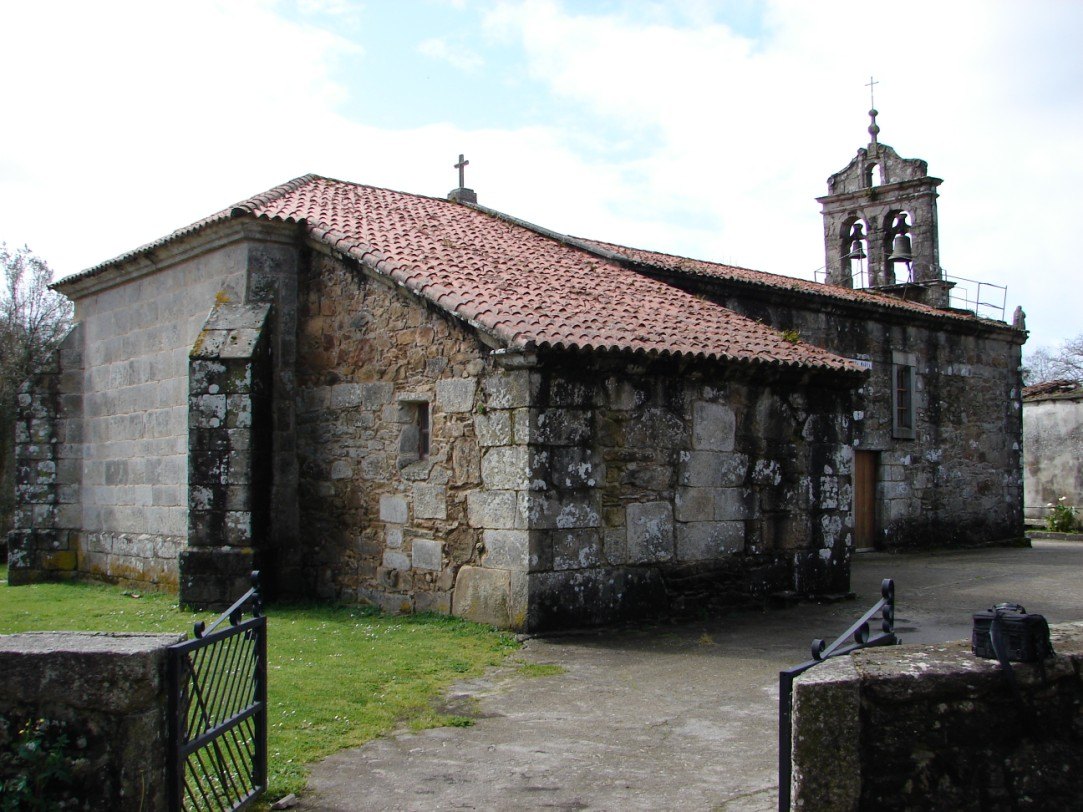
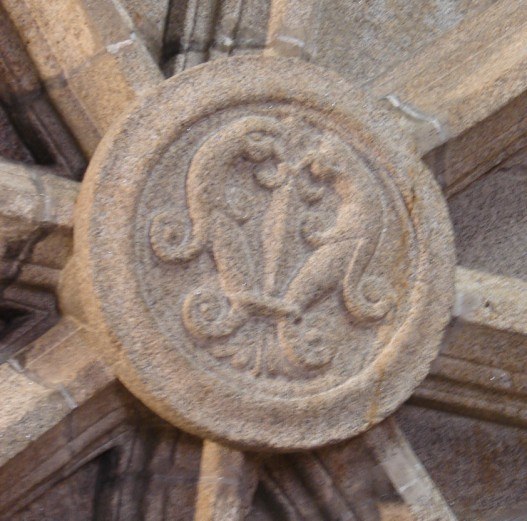
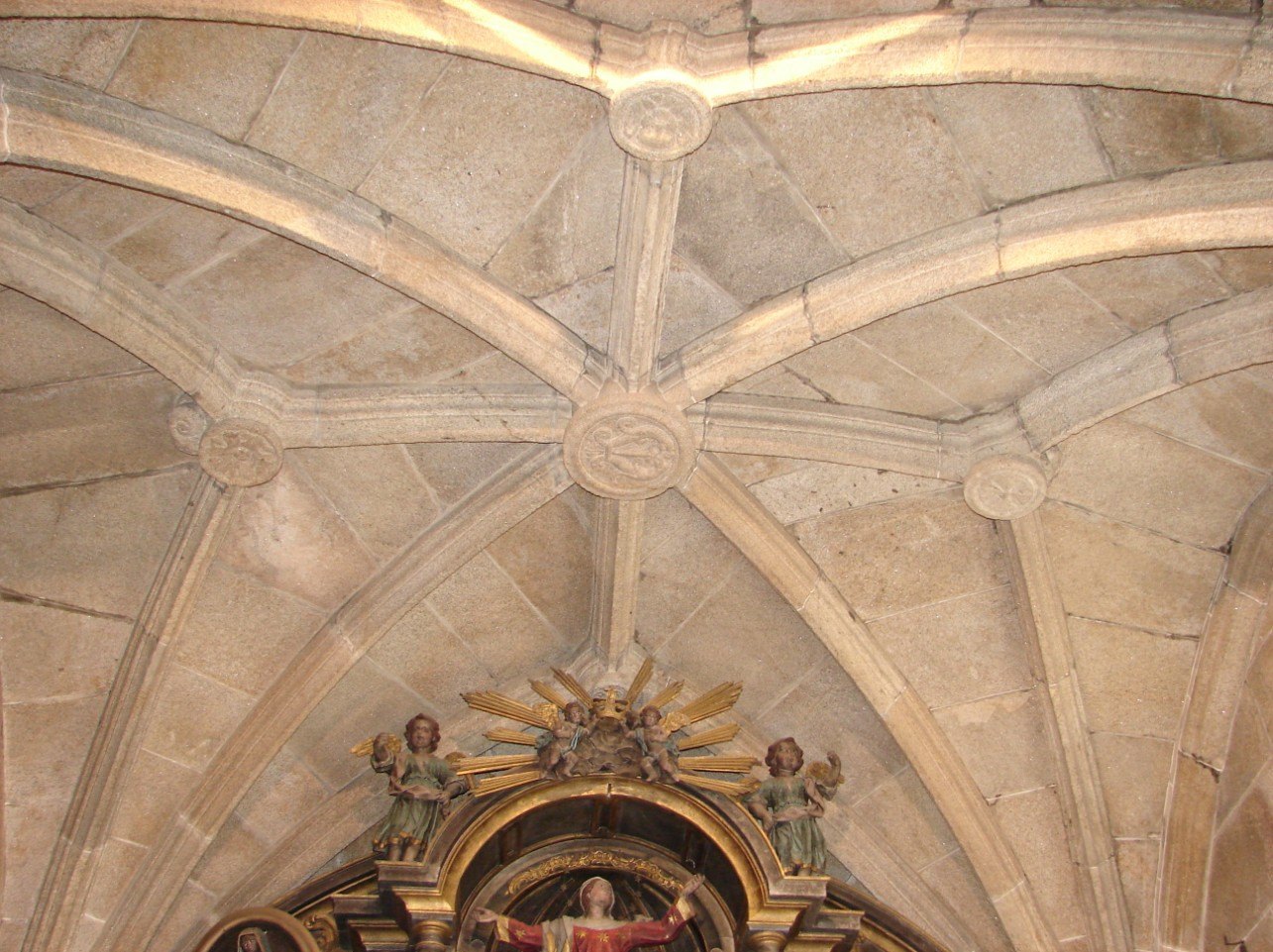
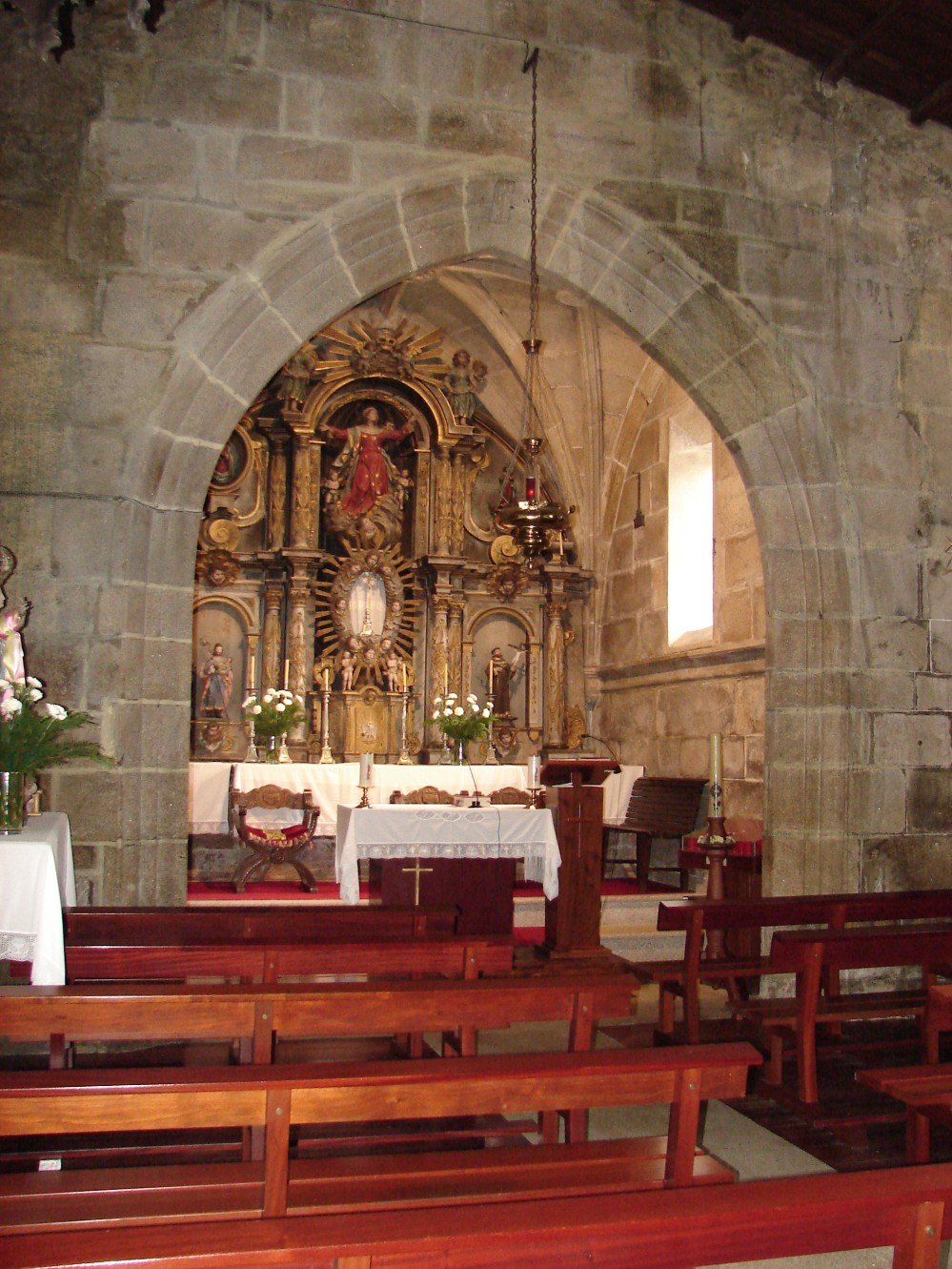
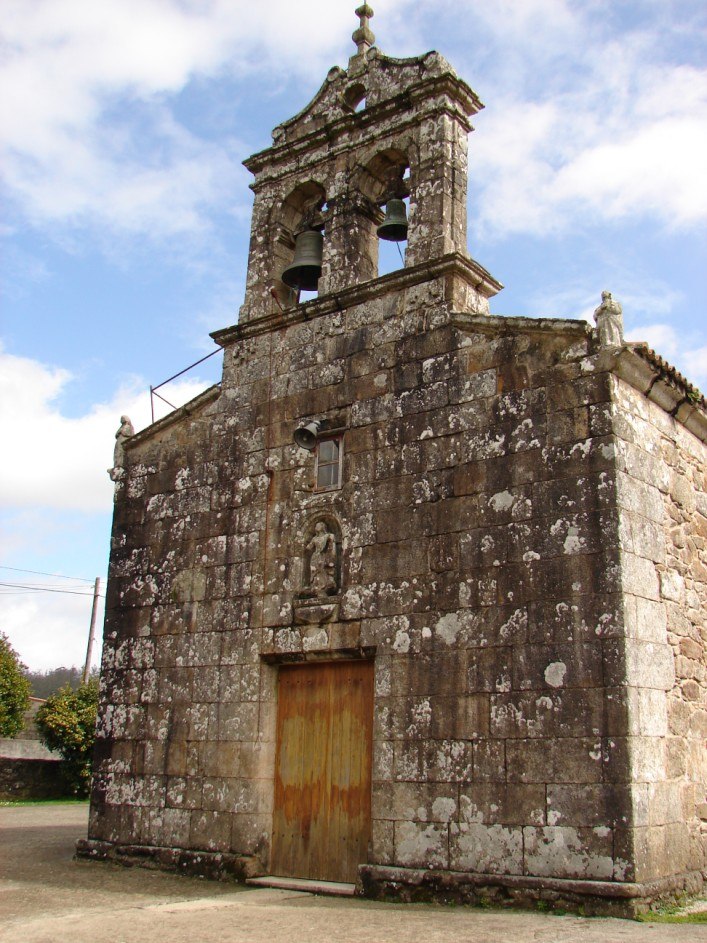
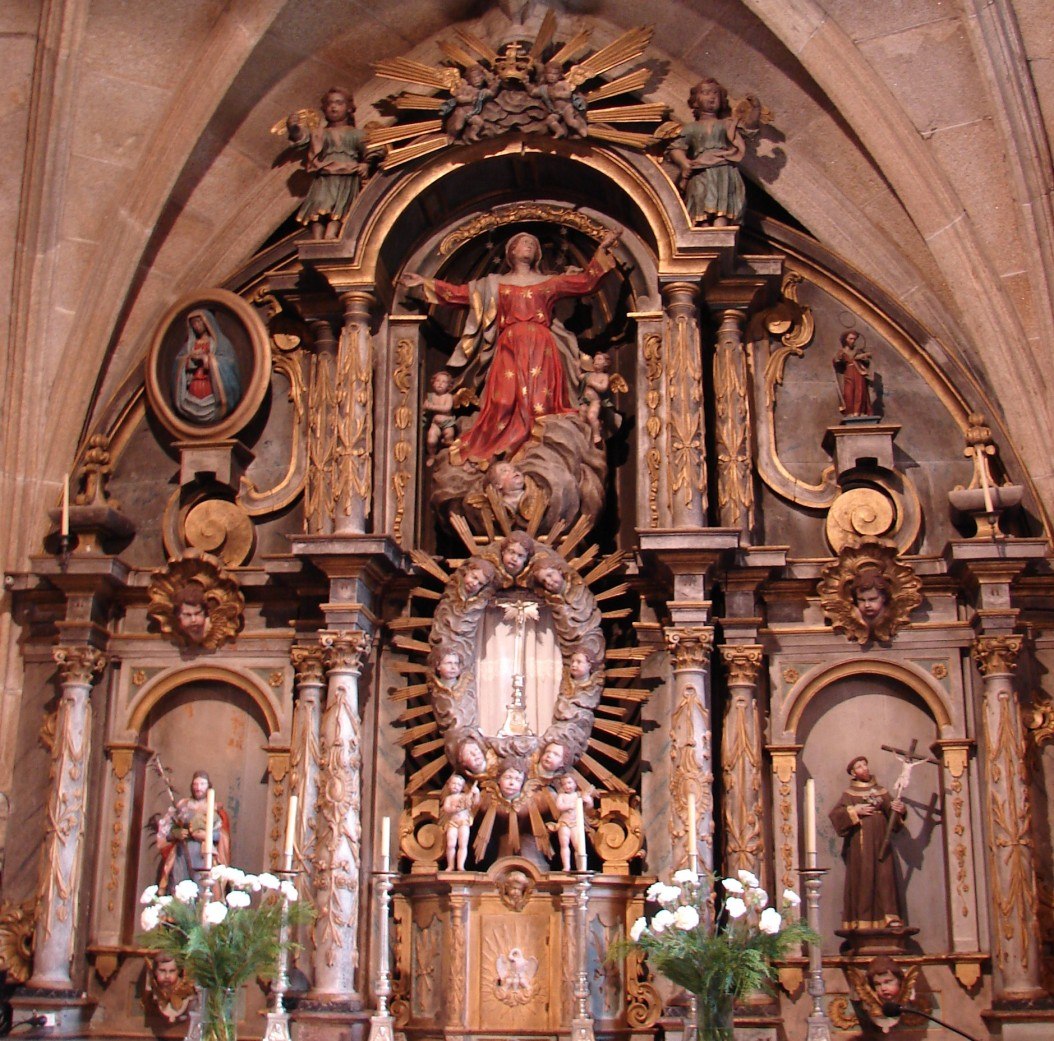
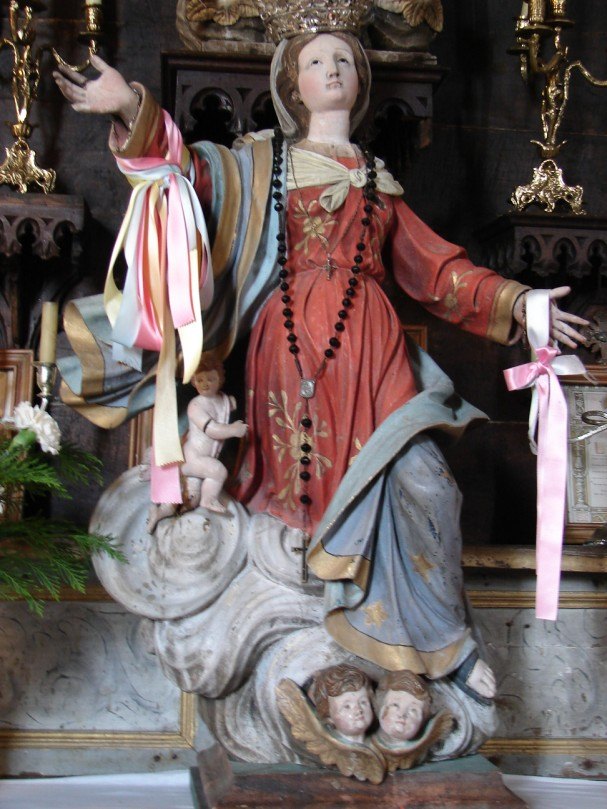
As for the parish church of Santa María de Lamas, the most outstanding feature is the main chapel, Gothic from the 16th century, covered by a beautiful star-shaped vault with richly worked ribs that intersect in a central keystone and four secondary ones. The majestic pointed arch, also Gothic and from the 16th century, which connects the main chapel with the nave, is also particularly striking.
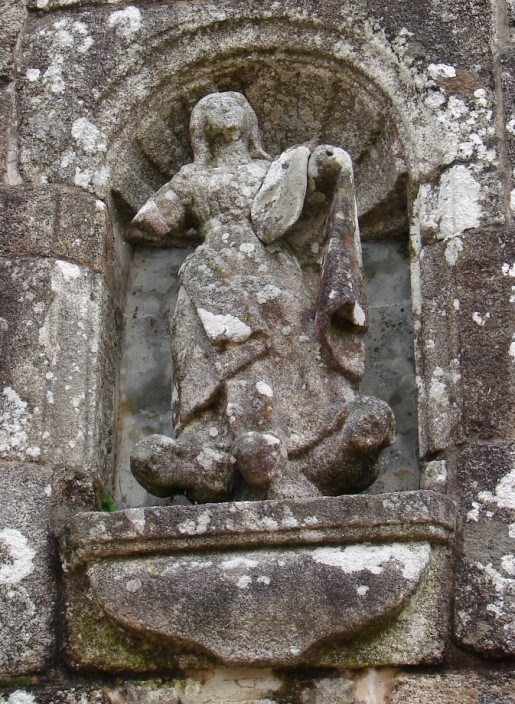
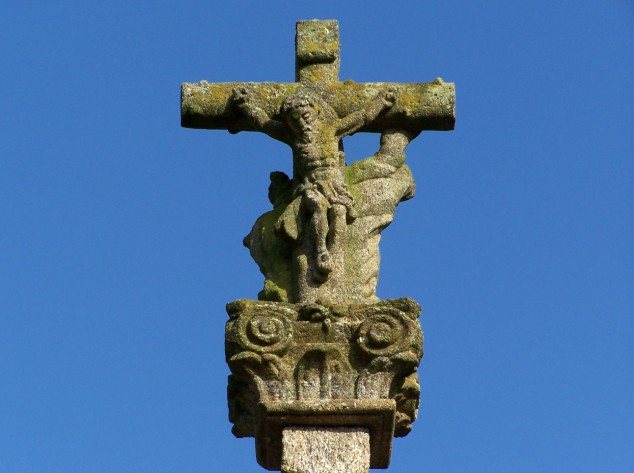
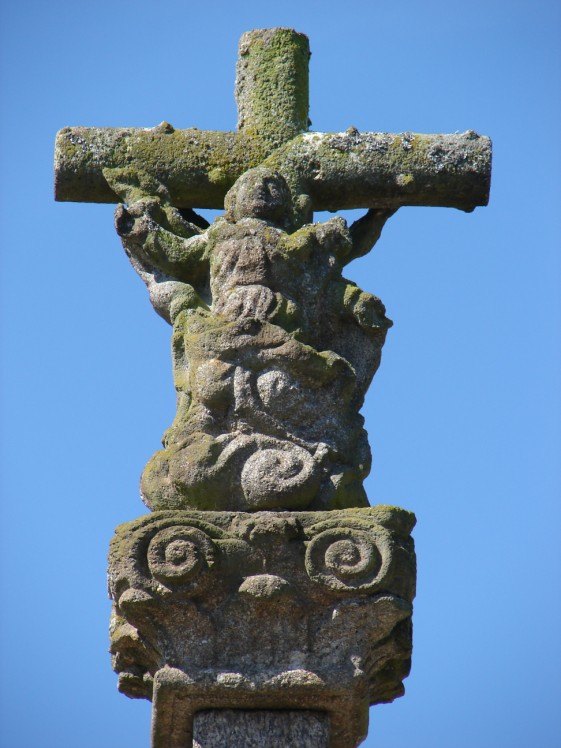
The rebuilding of the nave of the church in the 18th century cost iron and flour, since the local residents did not fully agree with the orders of the Archbishop’s visitor and the parish priest had to turn to a notary to threaten them in writing with “excommunication, imprisonment of their persons and other penalties” if they did not agree to cooperate with the works by providing their labour. The boldness of these parishioners is striking, bearing in mind the absolute power the Church wielded at the time; they were certainly daring. The reconstruction orders were issued in 1721, but the works did not start until 1734 and were completed in 1743. From this period date the stone sculptures on the façade and the long-shaft sto