O Allo is, without a doubt, the parish of greatest artistic and monumental interest in the whole concello of Zas, just as Brandomil was the one of greatest archaeological interest. In order to give enough time to appreciate all its value, we decided to publish the section for “Zas polo miúdo” in two parts, based on the summary set out above.
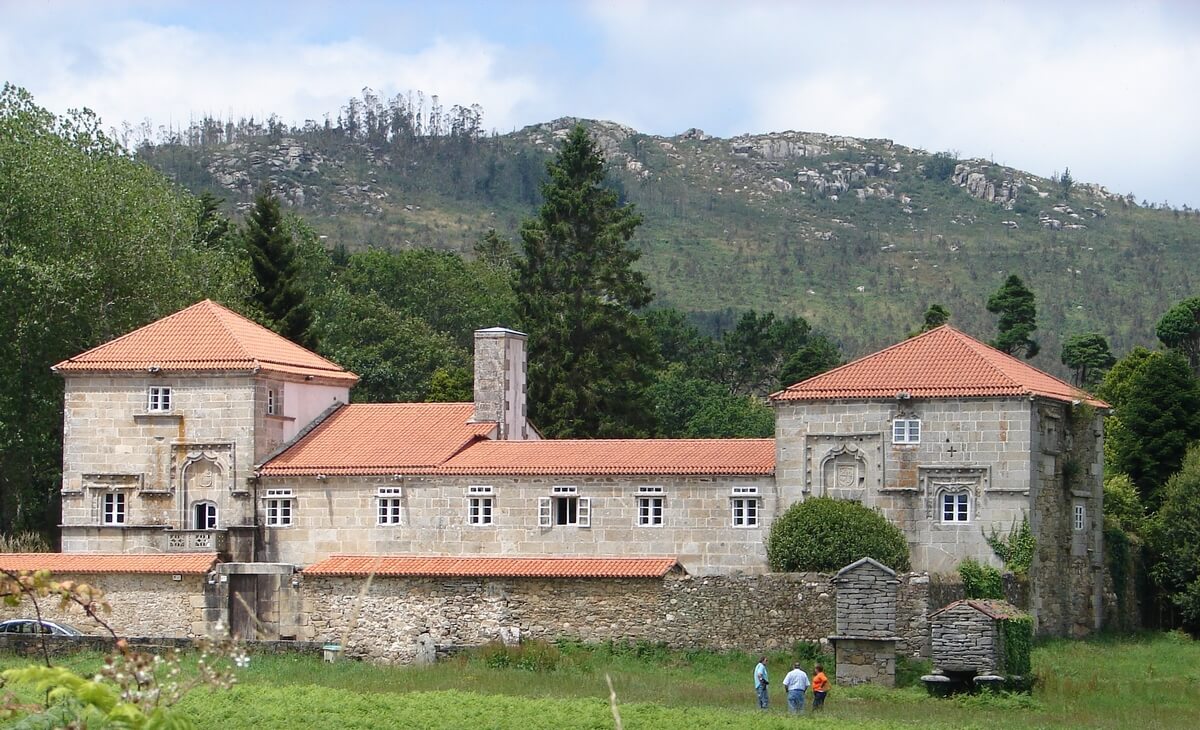
This first part is therefore devoted to its geography, toponymy and, of course, to the history of the Torres do Allo, the monument for which it is known throughout Galicia.
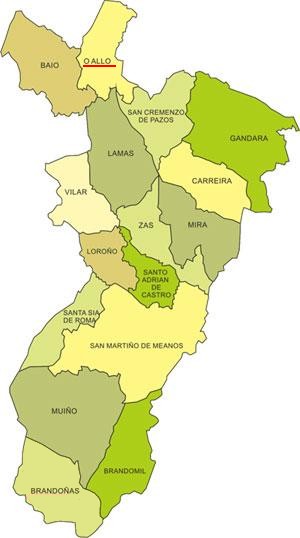
As regards its geography, we highlight that it is located in the northernmost part of the concello of Zas, its northwest corner being the most northerly point. It borders the parishes of Anos, Cesullas and Borneiro (in the concello of Cabana de Bergantiños) and San Cremenzo, Lamas and Baio (in that of Zas). Its area is around 7 km2 and it is an annex parish of San Cremenzo de Pazos.
Its territory is mostly hilly, although in its southern part there are some level areas. At the bottom of the Esmorís river valley –which belongs to the Anllóns basin– we find the lowest altitude in the entire concello: 110 m. Along its southern edge runs the río do Porto, the Río Grande of Terra de Soneira. In the approximately 4 km along which it flows on the boundary or within the parish, it accumulates a drop in elevation of around 10 m.
Geologically it forms part of the Malpica–Tui Unit and, in lithological terms, it is the parish that shows the greatest uniformity in the whole concello, based on biotitic orthogneiss, schists and paragneiss.
With regard to its place names, the etymological origin of the parish’s own name, O Allo, is much debated, and up to four different proposals have been put forward. The other place names arose in the 17th century, from houses that the Rioboo family built for their tenant farmers. A Cebola was probably a “replicating”, playful toponym based on the already existing O Allo.
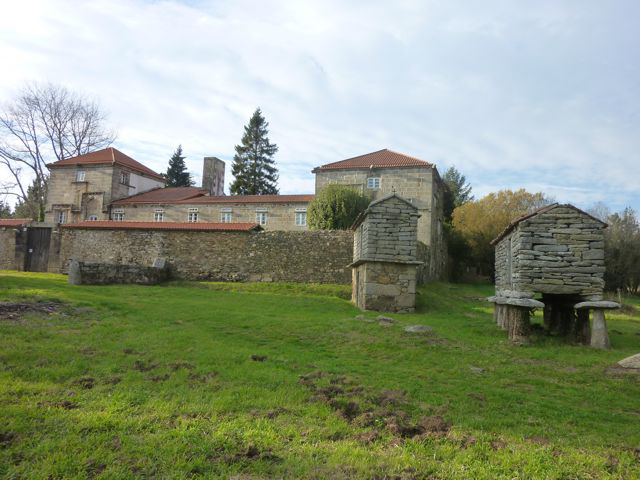
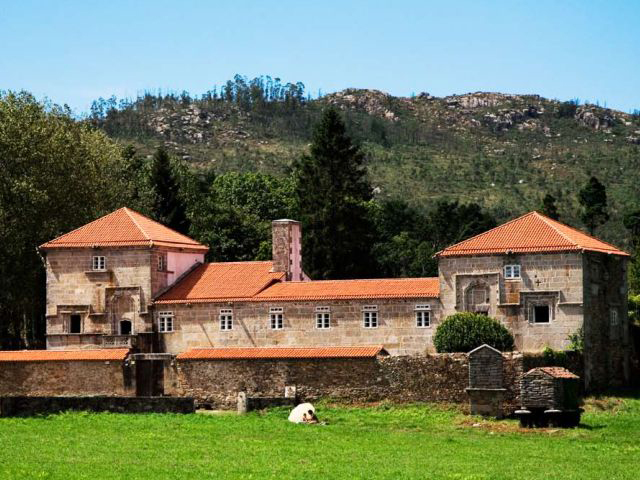
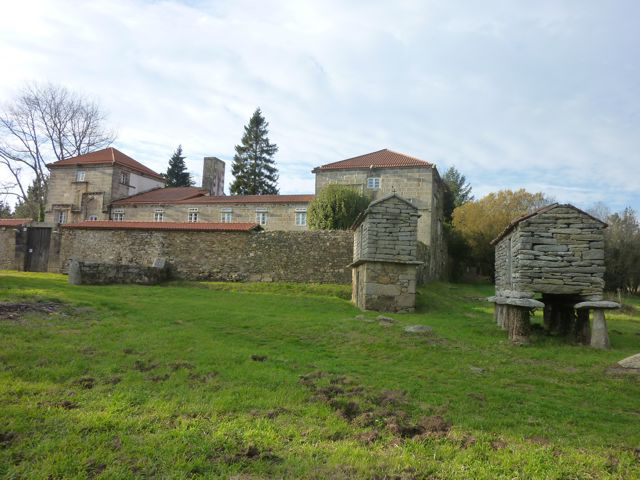
The Torres do Allo are considered “the first Galician pazo”, and it had always been thought that they were built in their entirety at the end of the 15th–beginning of the 16th century, since their layout –a central rectangular body and two square towers on either side–, as well as the decorative elements of the two towers, almost identical, were typical of that period. But everything changed with recent research by Professor J. Á. Sánchez García, who had access to the Rioboo archive and discovered that only the north tower dated from the original period, while the south tower was an almost identical copy built in the second half of the 17th century, almost 200 years later. Following the monograph by this researcher (Torres do Allo, 2001), we drew up a chronological table with the most notable events of the successive lords of O Allo, especially those two who carried out the most important works (see the link).
We end the first part with a schematic table of the lords who owned them, the Rioboo family, from the 15th century until 1998, when the Deputación da Coruña bought the property and restored it. Guided tours and, above all, the dramatized visits organised by the Concello de Zas have increased visitor numbers as never before.
In the second part we will talk about the church and other unique elements of this parish, the true “crown jewel” of the concello, as well as about famous figures who lived there.
This second part deals with aspects that remained pending from the first one, such as: the analysis of the parish church, the heraldry and other distinctive elements of the parish; notable figures connected with the parish; the childhood stay of the avant-garde poet Manuel Antonio; the disputes between the enlightened priest Antonio de Rioboo Seixas and Diego Cernadas de Castro –priest of Fruime–; the O Allo industrial estate, the parish festivities and the inventory of heritage assets.
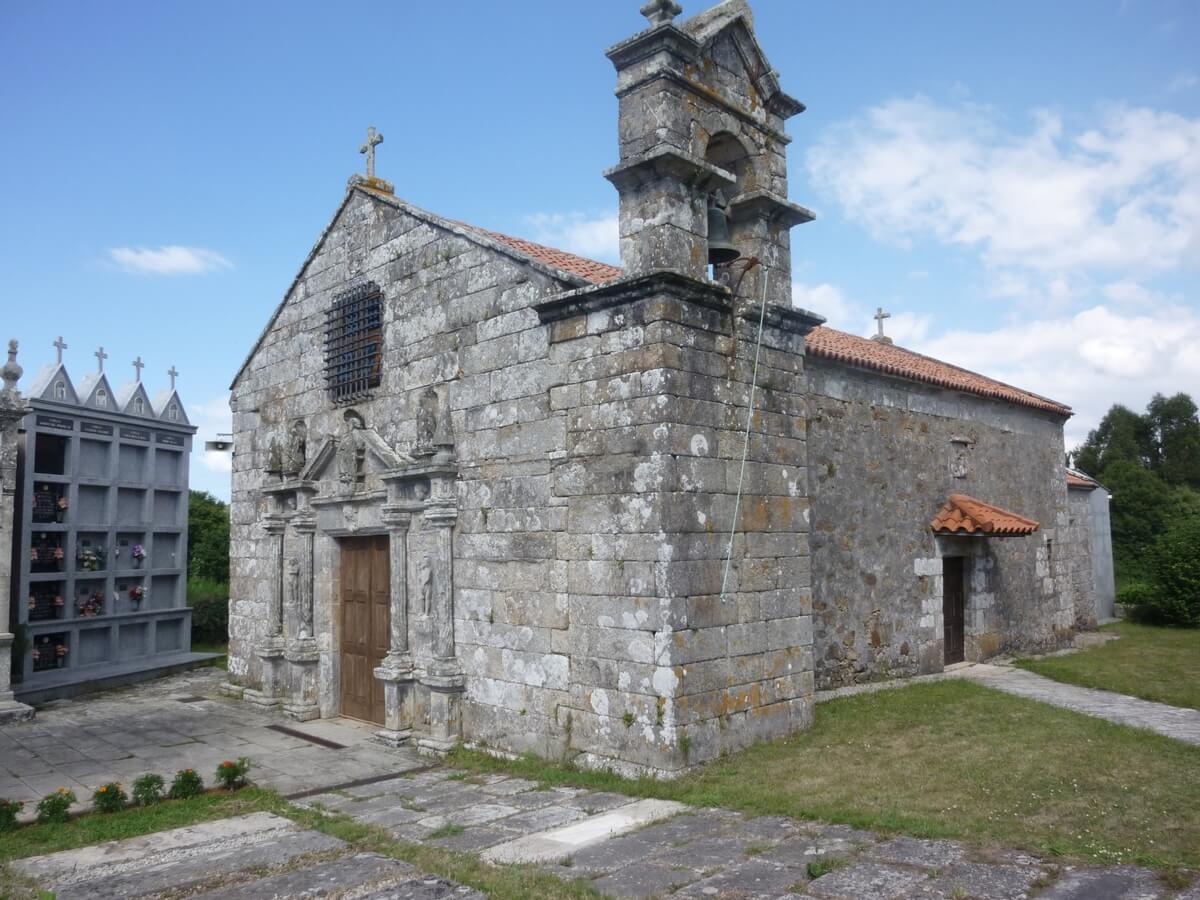
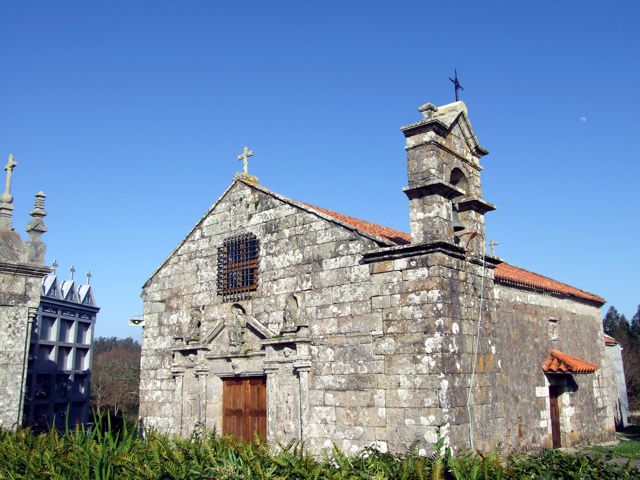
The parish church began to be built around 1561, when the lord of O Allo was Gómez Rioboo Villardefrancos o Vello (“the Elder”). It has a Renaissance-style façade-retable in the form of a triumphal arch divided into three panels, separated by columns, the central one being the widest and flanked by fluted-shaft columns. On either side are the figures of Adam and Eve. Above the door, seated in his chair, is Saint Peter. The iconography is completed by the archangel Gabriel and the Virgin Mary. Above the south side door there is a bust of Saint Paul. It underwent works or refurbishments in 1644, 1702, 1741, 1892/98, 1943, 1944, 1945/49, 1985 and 1989.
There are 6 coats of arms between the parish church and the Torres, bearing the arms of the families who held lordship over this “couto”. A seventh coat of arms, formerly in Xerne, is now kept in the pazo de Daneiro.
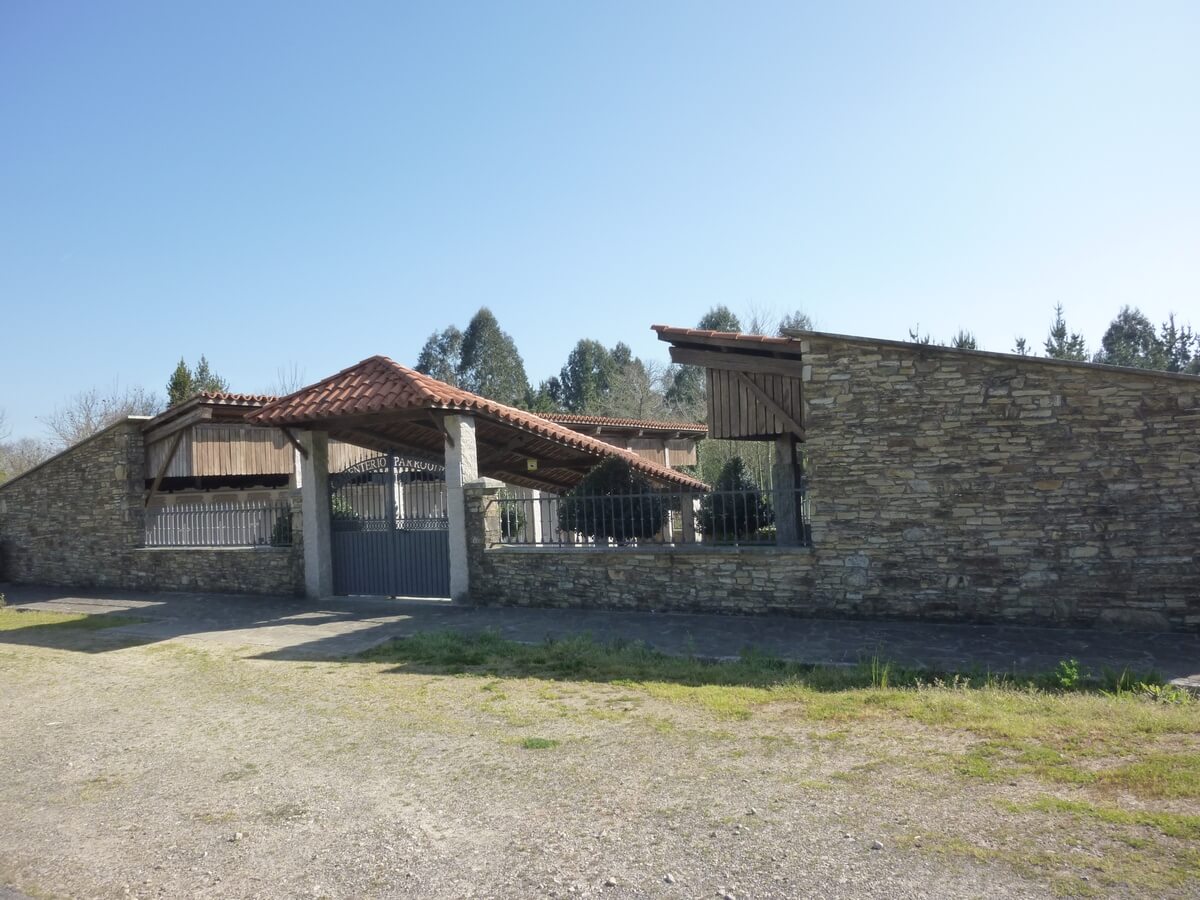
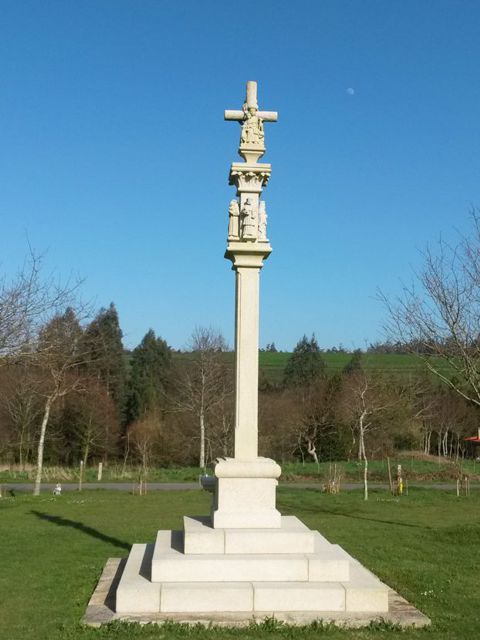
Two distinctive elements help to enhance the importance of this parish: the new stone cross (cruceiro) in the churchyard, from 2013, and the new parish cemetery (2006), the latter with a design and materials that make it unique in the area.
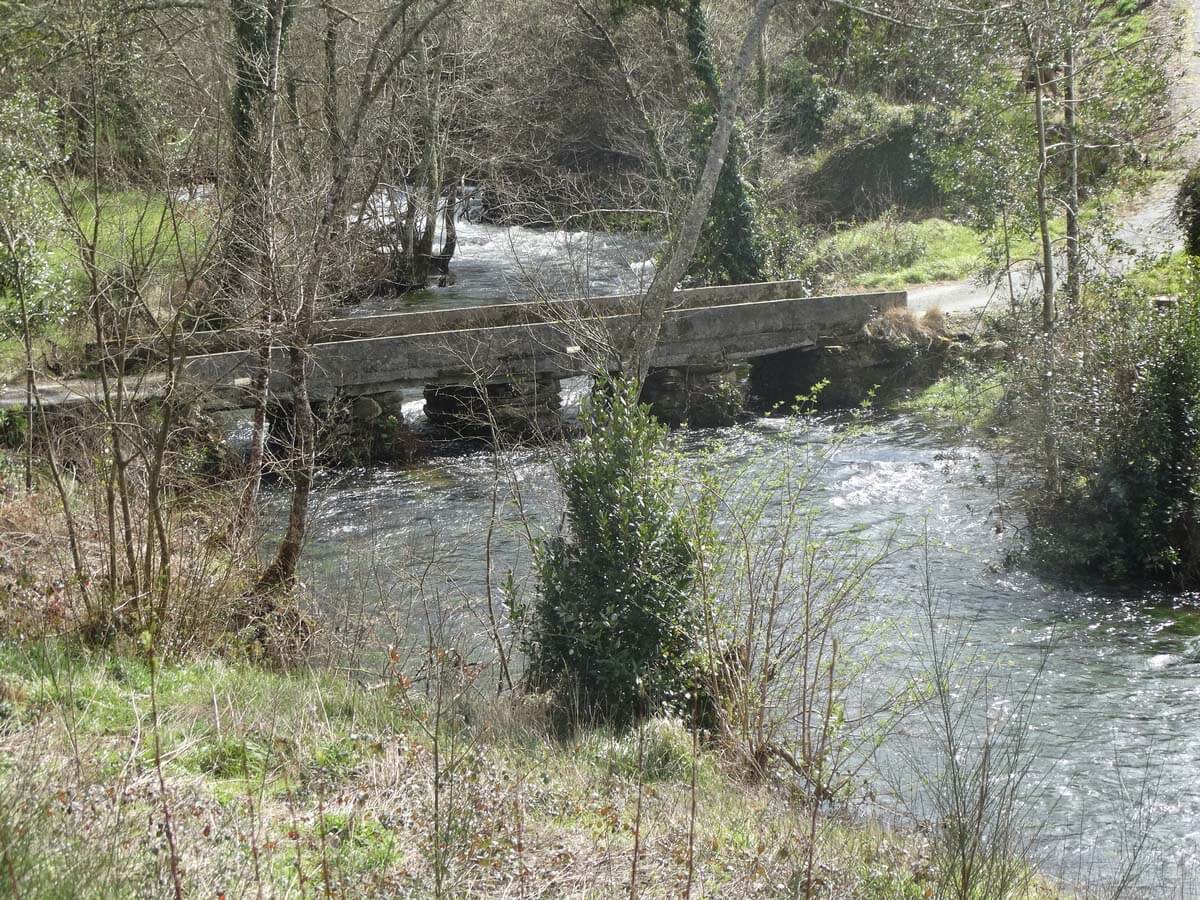
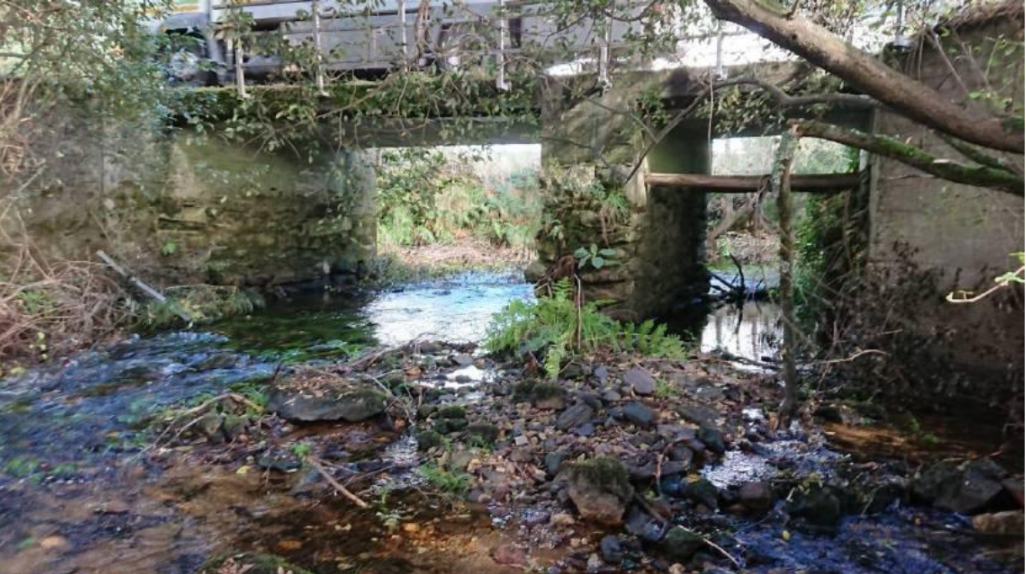
Given the abundance of water, it is not surprising that there are mills –four of them already documented in 1753–, mainly near the Castiñeira bridge and those on the Regueiro do Allo. The former are closely linked to the owners of the Torres, and the latter, also known as muíños de baruto, which remained in operation until not many years ago, were a first-rate ethnographic feature.
What follows is the view of the parish left to us by historical texts from the years 1607, 1753, around 1847 and around 1928.
Antonio de Rioboo e Seixas is the author of numerous historical works, among which the following stands out: La Barca más prodigiosa. Poema historial sagrado de la antigüedad, invención y milagros de el célebre Santuario de N. S. de la Barca, colocado en los confines del Puerto de Mugía en el Reyno de Galicia. He went on to become a member of the Real Academia de la Historia. His famous war of words with Diego Cernadas de Castro is well known, from which arose the well-known gloss that begins “Ai do Allo, ai do Allo…”
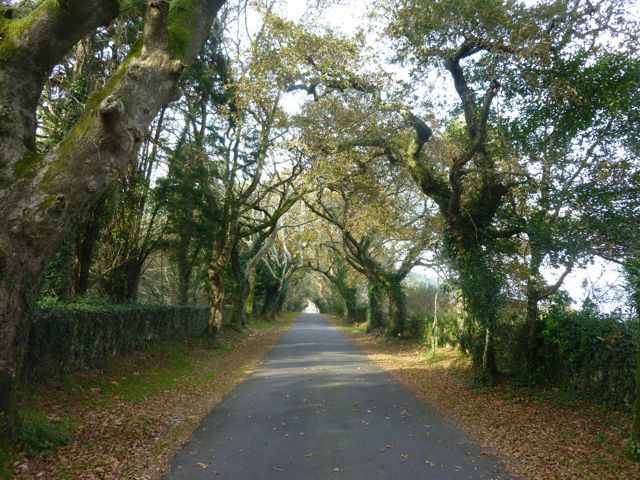
Another key figure connected with the parish was the distinguished naturalist Víctor López Seoane, consort owner of the Torres through his marriage to Francisca de Rioboo. It is believed that he was the one who planted or ordered the planting of the oaks and sycamores that line the two access roads to the Torres.
It is also worth noting that between 1901 and 1916 Pura Sánchez, mother of the avant-garde poet Manuel Antonio Pérez Sánchez, was the teacher at the school in O Allo; this poet maintained an intense friendship with other young contemporaries of his from Baio.
O Allo has an industrial estate: “Os Muíños”, fully consolidated and in a phase of expansion, the only one in the concello of Zas. Among the companies located there, one standout is the vehicle inspection station (ITV), secured after not a few difficulties and strong social pressure.